
A storm can leave behind more than visible damage. Water may be moving behind walls, roof openings can allow continued intrusion, and damaged electrical systems can create immediate safety concerns. Effective storm damage restoration begins with protecting people and stopping additional loss – then creating a clear path to restore the property, its contents, and normal routines.
For homeowners, that may mean securing a family home after high winds, hail, flooding, or a fallen tree. For commercial property leaders, it may mean protecting inventory, documenting damage, and reducing downtime before a temporary problem disrupts operations. In either case, the first hours matter.
Put Safety Before Cleanup
Do not enter a damaged building until you can do so safely. Look for downed power lines, structural movement, sagging ceilings, broken glass, standing water near electrical equipment, gas odors, and exposed wiring. If there is an immediate hazard, leave the area and contact the appropriate emergency utility or public safety agency.
Once the property is safe to enter, take steps to prevent further damage. Move dry, valuable items away from leaks if possible. Place containers beneath active drips only when doing so does not create a slip or electrical hazard. If water is entering through a roof opening or broken window, temporary protection may be needed quickly to limit interior damage.
Avoid beginning major cleanup before the damage is documented. Photos and video should capture affected rooms, damaged building materials, visible water lines, exterior damage, and impacted belongings. For commercial properties, document damaged equipment, inventory, tenant areas, and any interruption to operations. Good records help create a more accurate restoration plan and support the insurance process.
The Storm Damage Restoration Process
Storm losses can look chaotic, but recovery works best when it follows an organized sequence: assessment, mitigation, and restoration. Each phase has a distinct purpose, and skipping one can lead to hidden damage, unnecessary expense, or repairs that do not hold up over time.
Assessment identifies the full scope
Visible damage rarely tells the whole story. A professional assessment considers the source of the damage, how far water or moisture has traveled, which materials can be saved, and whether the structure remains safe. Moisture detection equipment can identify water behind drywall, beneath flooring, inside insulation, and in concealed building cavities.
The assessment should also account for the type of storm event. Wind-driven rain may affect multiple sides of a building, while a roof leak may travel far from the point where water entered. Floodwater, sewer backups, and water from a damaged appliance require different cleaning and safety procedures. The right response depends on the source, the category of water, the materials affected, and how long conditions have been present.
For commercial sites, the assessment should address operational priorities as well. A restaurant may need to protect food-service areas and equipment. A warehouse may need to isolate damaged inventory and maintain safe access routes. A church, school, or multifamily property may need a plan that protects occupants while allowing the facility to remain partially operational where possible.
Mitigation stops additional damage
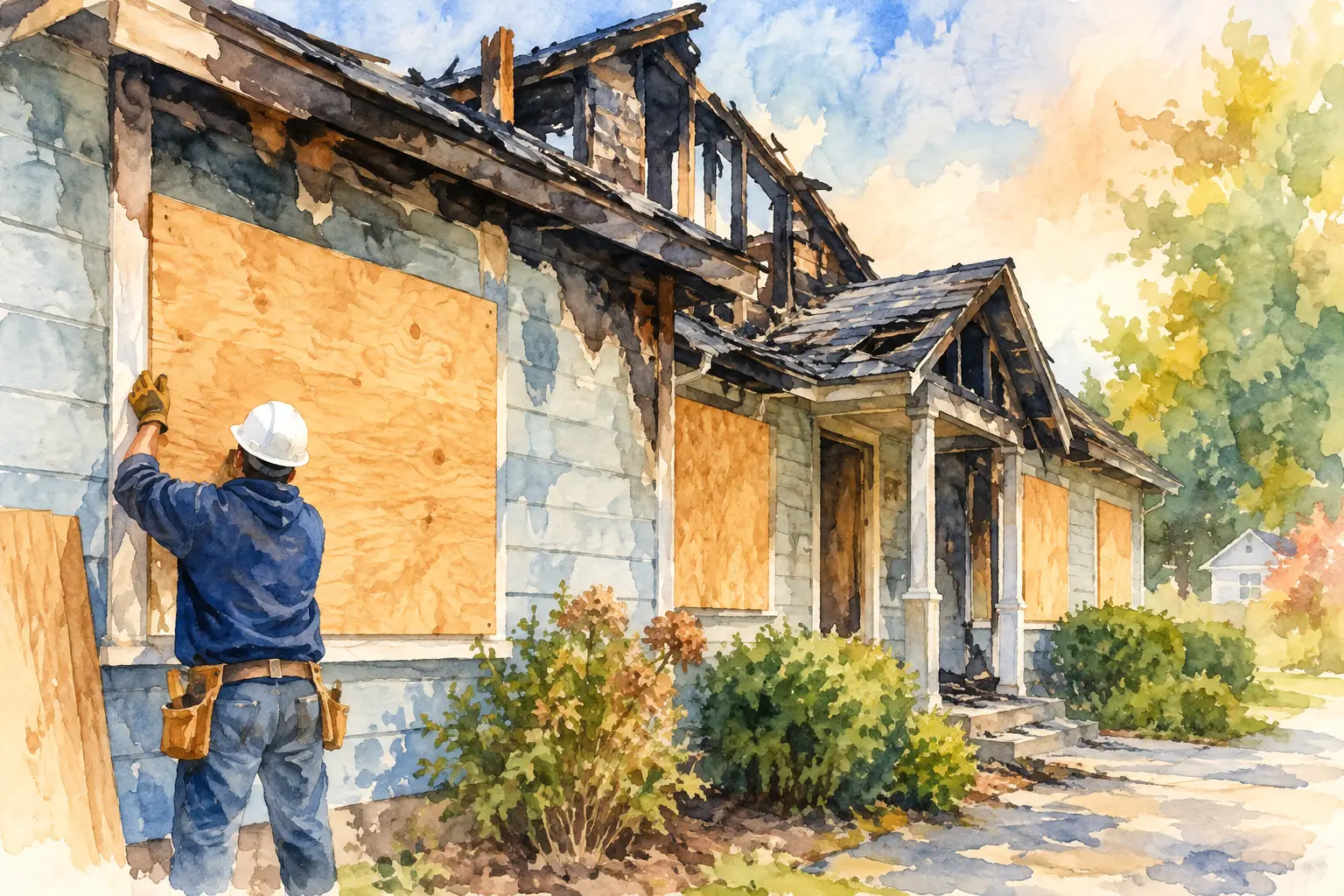
Mitigation is the emergency work that stabilizes the property. It can include emergency board-up, roof tarping, water extraction, structural drying, debris removal, containment, temporary power coordination, and cleaning of affected surfaces. The goal is not cosmetic repair at this stage. It is to stop the loss from getting worse and preserve as much of the property as possible.
Fast drying is especially important after storm-related water intrusion. Wet drywall, insulation, carpet, wood flooring, and contents can deteriorate quickly. Moisture left in place can also create conditions that support mold growth. Proper drying requires more than fans placed in a room. It requires measured airflow, dehumidification, moisture monitoring, and adjustments as materials dry.
Some materials can be restored when addressed promptly. Others may need removal because they cannot be safely cleaned or dried. This is where experienced judgment matters. Removing too much adds cost and disruption; removing too little can leave hidden moisture or contamination behind.
Restoration returns the space to pre-loss condition
Once the property is dry, clean, and stable, restoration work can begin. Depending on the loss, this may include drywall repair, flooring replacement, painting, cabinetry work, roofing repairs, reconstruction, and specialty cleaning of contents.
A single accountable restoration provider can simplify this phase. Rather than coordinating emergency crews, cleaners, contractors, and multiple repair vendors, property owners can work through one recovery plan from initial damage through reconstruction. ServiceMaster Restore by DCS helps residential and commercial customers manage that process with a Restore Team on Call 24/7/365.
Storm Damage Is Not Always Obvious
A broken window or missing shingles are easy to see. Other storm damage takes time to reveal itself. Water may move through attic insulation before staining a ceiling. Wind can loosen flashing or siding without creating an immediate leak. Hail damage may affect roofing materials in ways that require a trained inspection to identify.
Watch for damp or discolored ceilings, bubbling paint, warped flooring, musty odors, peeling wallpaper, soft drywall, unexplained humidity, and changes around windows or exterior doors. These signs do not always mean extensive damage, but they should be evaluated before a small problem becomes a larger repair.
It also helps to avoid assumptions based on appearance. A ceiling may look dry while insulation above it remains saturated. A carpet may feel mostly dry while padding and subflooring retain moisture. A careful inspection provides the information needed to make sound decisions instead of guessing.
Protect Business Continuity After a Storm
For commercial properties, storm recovery is about more than repairing a building. It is about protecting people, revenue, customer trust, and the ability to reopen safely. The best plan balances urgency with control.
Start by identifying the areas that affect immediate operations: electrical rooms, server rooms, kitchens, production areas, inventory storage, customer entrances, and tenant spaces. Restrict access to unsafe areas and create clear communication for employees, vendors, tenants, or customers. If the building can remain partially open, establish safe routes and isolate restoration work from occupied areas.
Documentation is particularly valuable for commercial claims and internal decision-making. Keep records of emergency actions, invoices, photographs, affected assets, employee communications, and operational interruptions. A restoration team that understands commercial recovery can provide clear scope information and help organize the work around business priorities.
Work With Your Insurance Carrier, but Act Quickly
Contact your insurance carrier promptly after a storm loss and follow its reporting requirements. At the same time, do not wait for every claim detail to be resolved before taking reasonable steps to prevent additional damage. Emergency mitigation often protects the property and may reduce the overall cost of the loss.
Keep damaged materials or contents when practical until they have been documented and reviewed. Do not discard items simply because they look beyond repair. Restoration professionals can help determine what may be cleaned, restored, or inventoried for the claim.
Insurance coverage varies by policy, cause of loss, deductible, endorsements, and property type. A qualified restoration company cannot determine coverage, but it can provide thorough documentation, explain the work being performed, and communicate clearly with the parties involved in the recovery.
Know When to Call for Emergency Help
Immediate professional assistance is appropriate when water is actively entering the building, a roof or wall opening exposes the interior, structural materials are damaged, sewage or floodwater is present, electrical safety is uncertain, or moisture has spread into floors, walls, or ceilings. The same applies when a business cannot safely operate or when valuable contents are at risk.
Storm recovery is easier when the response is fast, measured, and complete. After the weather clears, the next right step is to protect the property from further loss and bring in a team that can restore what matters most.