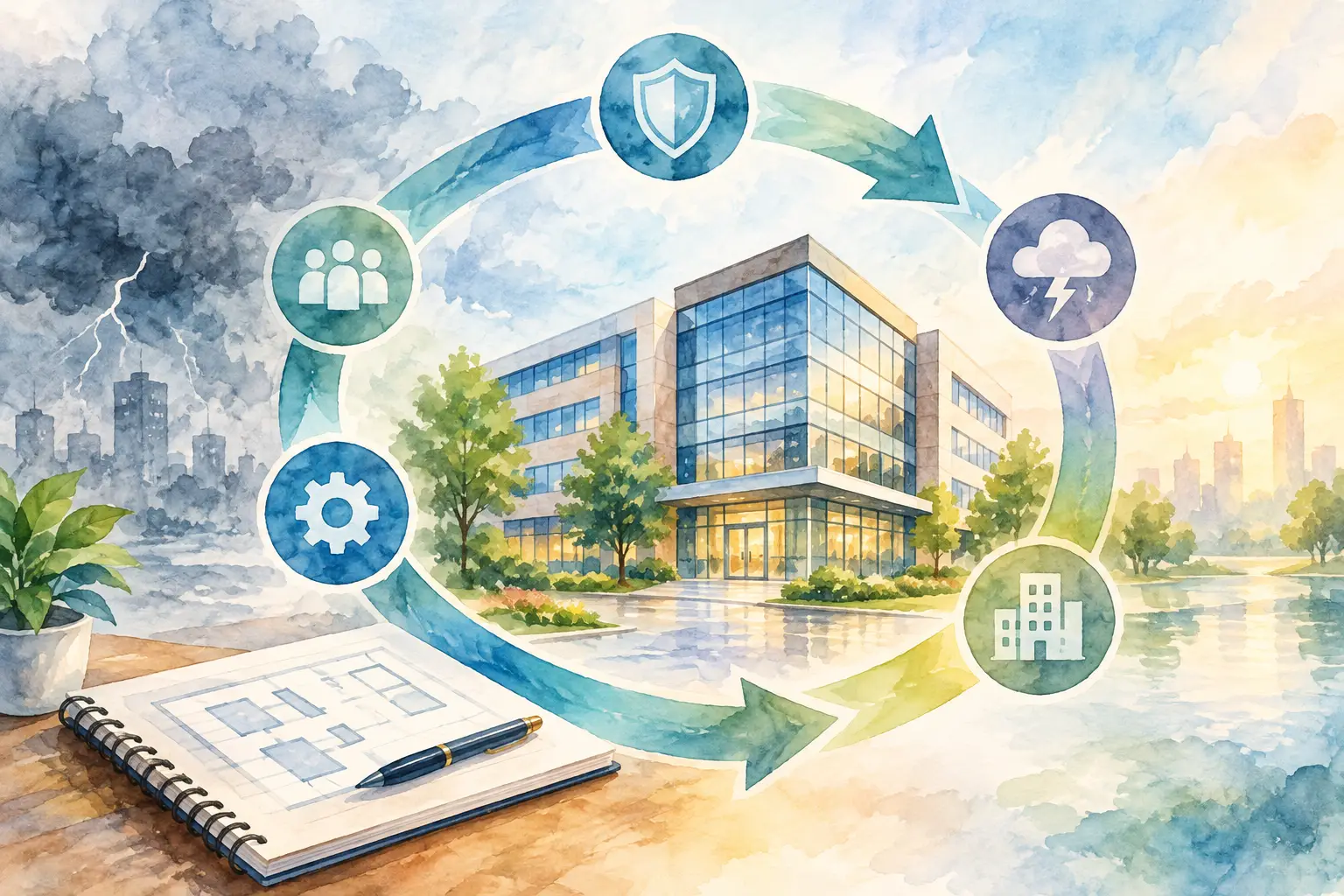

A burst pipe above a server room, a kitchen fire during dinner service, or storm damage at a warehouse can stop business long before the cleanup begins. A commercial continuity planning guide gives facility leaders a practical way to make decisions before a loss creates pressure, confusion, and costly downtime. The goal is not to predict every emergency. It is to protect people, limit property damage, preserve critical operations, and create a clear path back to normal.
For businesses across Illinois and southeastern Wisconsin, continuity planning should account for more than a single disaster scenario. Freezing temperatures, heavy rain, wind damage, sewer backups, equipment failures, fire, smoke, and mold can all affect a facility’s ability to operate. A useful plan identifies what matters most, assigns responsibility, and makes the first hours after an incident more organized.
What Commercial Continuity Planning Should Accomplish
Business continuity is often confused with an emergency response plan. Emergency response focuses on immediate life safety: evacuating occupants, calling 911 when needed, and securing the scene. Continuity planning goes further. It addresses how the organization will communicate, keep essential functions moving, document damage, work with insurers, and restore the building safely.
For a restaurant, continuity may mean protecting food inventory, reopening a limited service area, and preventing smoke or water from affecting adjacent spaces. For a church or school, it may mean relocating events, securing records, and restoring safe indoor conditions. A warehouse may prioritize inventory protection, loading access, equipment recovery, and coordination with tenants or customers.
The right plan depends on the facility, its operations, and the acceptable amount of downtime. Not every business needs a duplicate location or a complex command center. Every business does need a realistic process for responding to a loss without losing control of the recovery.
Start With the Operations You Cannot Afford to Lose
Begin by identifying the people, spaces, systems, and assets that keep your organization functioning. Focus first on the functions that would cause the greatest operational, financial, safety, or reputational impact if they were unavailable for one day, three days, or two weeks.
Walk the property with department leaders, maintenance staff, and property management partners. Look beyond obvious hazards. Identify shutoff valves, electrical panels, roof access points, fire suppression controls, mechanical rooms, drains, high-value inventory, records storage, and technology equipment. Make sure this information is documented where it can be accessed off-site, not only in a binder that could be damaged with the building.
A strong assessment also considers dependencies. Your building may be structurally sound but unable to operate because the internet is down, a key supplier cannot deliver, employees cannot access the site, or a neighboring tenant’s water loss has affected shared systems. These details shape a plan that works in a real disruption rather than only on paper.
Set Recovery Priorities Before the Loss
Recovery priorities should be specific enough to guide decisions. For example, a property manager may decide that life safety systems, tenant communication, water extraction, and electrical evaluation come before cosmetic repairs. A manufacturer may prioritize equipment protection, environmental controls, and access to shipping lanes.
This is also the time to determine who can authorize emergency work. Delays often occur when an after-hours manager recognizes a problem but cannot approve mitigation, access restricted areas, or speak with the insurance carrier. Establish primary and backup decision-makers, along with current contact information and spending authority.
Build a Clear First-Hour Response Plan
The first hour after water, fire, sewage, or weather damage can greatly affect the size of the loss. Water can migrate beneath flooring and into wall cavities. Smoke residue can spread through HVAC systems. A sewage backup requires immediate containment and professional cleaning to protect occupants. Fast action is about preventing additional damage, not simply cleaning what is visible.
Your first-hour plan should clearly state when employees should evacuate, when to contact emergency services, and who will secure the property. It should also include instructions for safely shutting off utilities when appropriate. Only trained and authorized personnel should handle electrical, gas, fire protection, or mechanical systems.
Keep a current emergency contact list in a secure cloud location and in an accessible hard-copy format. Include key internal contacts, building ownership or management, utility providers, alarm monitoring, IT support, insurance contacts, and a qualified restoration partner. Make sure the list is reviewed at least twice a year, especially when staff or vendors change.
Do not ask employees to begin cleanup in unsafe conditions. Standing water, contaminated water, unstable materials, soot, damaged ceilings, and mold growth require an informed response. The first objective is to protect people and stabilize the environment so recovery work can proceed correctly.
Plan for Communication, Documentation, and Insurance
A disruption becomes harder to manage when customers, tenants, employees, vendors, and insurers receive inconsistent information. Assign one or two people to manage external communication. They should be prepared to share what is known, what actions are underway, which areas are affected, and when the next update will be provided.
Documentation should begin as soon as it is safe to enter the property. Take date-stamped photos and video of affected areas, damaged contents, equipment, inventory, and visible conditions. Keep records of emergency actions, vendor conversations, invoices, employee time, and temporary operating costs. These records support insurance discussions and help leaders understand the full impact of the event.
Insurance requirements vary by policy, so avoid assumptions about what is covered or which actions require approval. At the same time, waiting to mitigate active water intrusion or other ongoing damage can make the loss worse. A professional restoration team can help document conditions, communicate the scope of work, and provide the information needed to support the claims process.
Include Assessment, Mitigation, and Restoration
A practical continuity plan should follow the same sequence used during a well-managed commercial recovery: assessment, mitigation, and restoration.
During assessment, the response team identifies the source and extent of damage, evaluates safety concerns, and develops a recovery scope. This may include moisture detection, contamination evaluation, smoke and odor assessment, or inspection of structural and mechanical components.
Mitigation is the work that prevents further damage. Depending on the event, it may involve water extraction, drying, board-up, roof tarping, debris removal, content protection, cleaning, odor control, or containment. This phase matters because a building can suffer additional loss while leaders are still deciding what to do next.
Restoration returns the property toward pre-loss condition. It can involve detailed cleaning, repairs, reconstruction, flooring, drywall, painting, and coordination with other trades. Working with one accountable provider from emergency response through rebuilding can reduce handoffs and help keep the schedule, documentation, and quality standards aligned.
ServiceMaster Restore by DCS helps commercial property decision-makers prepare for and recover from disruptions with a coordinated approach built around these three stages. The value is not merely having a number to call during an emergency. It is knowing who will assess the damage, protect the property, communicate clearly, and manage the work required to restore operations.
Test the Plan Before You Need It
A plan that has never been tested may contain outdated contacts, unclear responsibilities, or impractical assumptions. Schedule a tabletop exercise at least once a year. Choose a realistic scenario, such as a sprinkler line break on a weekend, a storm-damaged roof before a major event, or a fire affecting a production area.
Ask each participant what they would do in the first 15 minutes, first hour, and first day. Where would they find emergency contacts? Who has access to the building? How would employees be notified? Which operations could move off-site or continue in another area? These conversations reveal gaps while the stakes are low.
Review the plan after any actual incident, even a minor one. A small water leak can expose the same communication or access problems that would slow recovery after a major loss. Update the plan when you renovate, add equipment, change occupancy, alter vendors, or expand operations.
Commercial continuity planning is not about eliminating every disruption. It is about replacing uncertainty with prepared decisions. When your team knows whom to call, what to protect, and how recovery will move forward, you can focus on restoring what matters most: a safe facility, a functioning operation, and confidence in the next step.