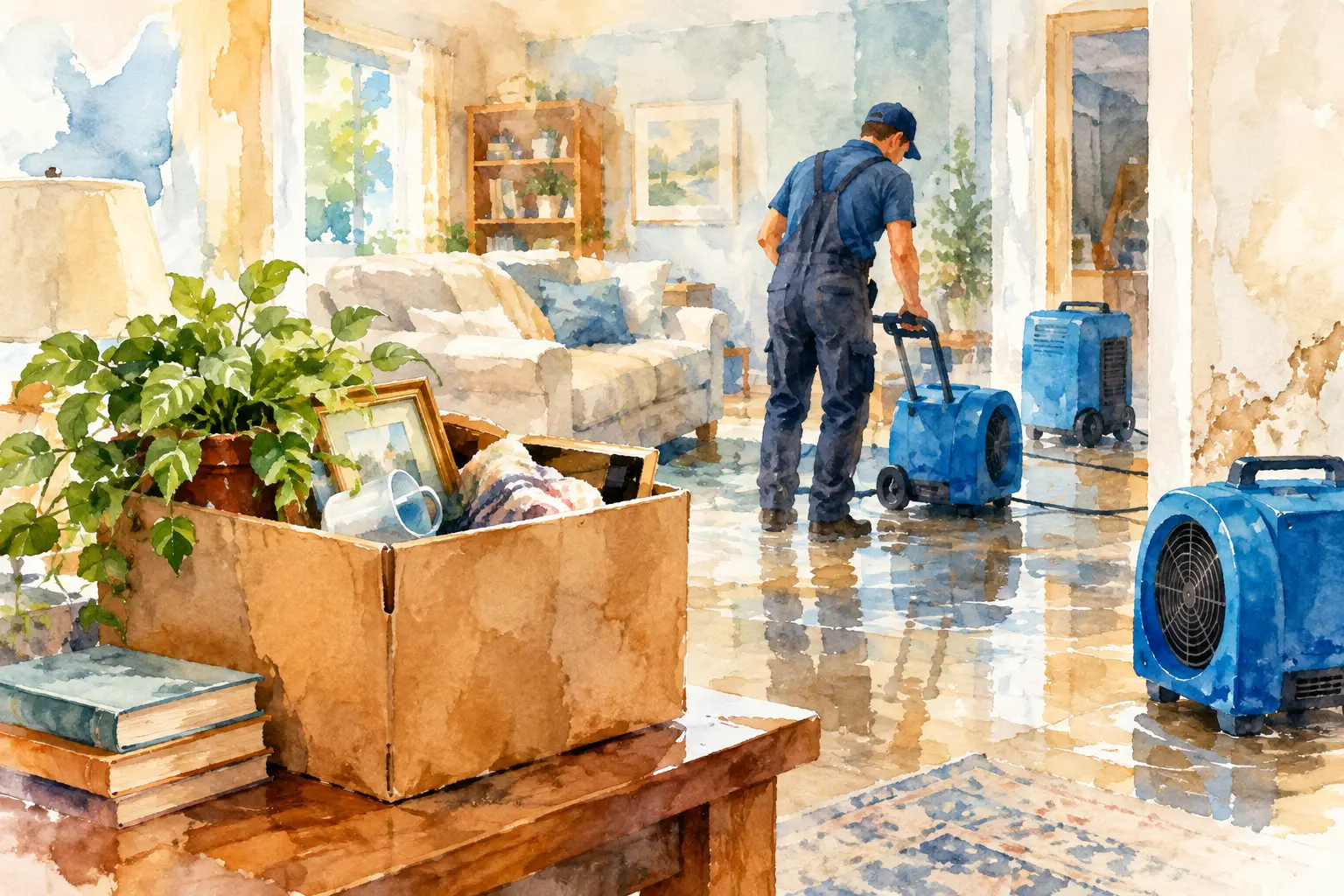
A soaked family photo album, smoke-covered inventory, or a conference room full of wet files can make a property loss feel far bigger than damaged walls and flooring. Contents restoration focuses on the items inside the building: the belongings, equipment, records, furniture, and materials that support daily life or business operations. The goal is to protect what can be saved, prevent additional damage, and return usable items to their proper place as efficiently as possible.
After water, fire, mold, sewage, or storm damage, time matters. Moisture can lead to staining, corrosion, mold growth, and warping. Smoke residue can permanently discolor surfaces and leave odors behind. The right response begins with organized assessment and stabilization, not with guesswork or a rushed cleanup.
What Contents Restoration Includes
Contents restoration is the professional cleaning, deodorizing, drying, sanitizing, and, when possible, repairing of personal or business property affected by a covered or uncovered loss. It may involve everyday household possessions, but it can be equally critical for commercial facilities where damaged contents can interrupt operations.
For homeowners, affected contents may include furniture, clothing, electronics, documents, books, area rugs, artwork, appliances, and sentimental items. For a business, the list can include office furniture, computers, product inventory, tools, machinery components, paper records, kitchen equipment, fixtures, and specialized materials.
Not every item can or should be restored. Safety, contamination level, material type, replacement cost, and the extent of damage all affect the decision. For example, a solid wood table exposed to clean water may be a strong restoration candidate if it is dried promptly. Porous items affected by sewage or extensive mold contamination may need to be removed for health and safety reasons. A qualified restoration team provides clear recommendations so property owners can make informed decisions.
The First Hours Protect What Matters Most
When a loss occurs, it is understandable to start moving items immediately. However, handling contents without a plan can create more damage or complicate insurance documentation. Wet papers may tear. Smoke residue can spread to clean surfaces. Electronics can be damaged further if they are powered on before evaluation.
The first priority is always to make the property safe. Once hazards are addressed, contents should be documented, categorized, and protected from further exposure. This creates an accurate record of what was affected and helps establish a practical restoration plan.
If it is safe to do so, avoid using household cleaners on soot-covered belongings, running wet electronics, or stacking damp papers and textiles. Do not throw away damaged items before they have been documented unless they present an immediate health or safety risk. Photos, notes, and organized inventory records can be helpful during the insurance process.
A Structured Contents Restoration Process
A dependable recovery process gives property owners a clear path forward. ServiceMaster Restore by DCS approaches contents recovery through assessment, mitigation, and restoration, with communication throughout each stage.
Assessment and documentation
Technicians begin by identifying the source and type of damage. Clean water, contaminated water, fire residue, soot, mold, and storm debris require different handling methods. They assess which items can remain on site, which require specialized treatment, and which may be unsalvageable.
Documentation is more than an inventory list. It records the condition of affected contents, supports insurance-related needs, and creates accountability as items move through the restoration process. For commercial properties, this stage may also identify mission-critical assets that need priority handling to reduce downtime.
Mitigation and pack-out
When a damaged area needs significant drying, cleaning, demolition, or reconstruction, contents may need to be carefully packed out and moved to a secure location. This protects belongings while work continues inside the property.
Each item or box should be labeled and tracked. A well-managed pack-out reduces the risk of loss, makes it easier to locate priority items, and prevents clean contents from being re-exposed to moisture, smoke, or dust. This is especially valuable after a large commercial loss, where thousands of items may need to be inventoried and coordinated.
Mitigation can also include moisture control, climate-controlled storage, surface cleaning, and odor containment. The purpose is straightforward: stop the damage from getting worse while the property itself is being stabilized.
Cleaning, deodorization, and recovery
The cleaning method depends on the material and the contamination. Upholstered furniture, hard-surface furnishings, textiles, documents, electronics, and inventory each require a different approach. Restoration professionals may use controlled drying, specialized cleaning agents, HEPA filtration, deodorization methods, content cleaning equipment, and detailed hand cleaning where appropriate.
Smoke and fire losses require particular care. Soot is not simply dirt, and improper wiping can grind residue into surfaces or spread it farther. Odor treatment also needs to address the source of the odor, not just cover it up. When smoke particles have settled inside furniture, textiles, or storage areas, effective deodorization may require cleaning, filtration, and controlled treatment of both the contents and surrounding space.
For water damage, speed has a direct effect on recoverability. Prompt extraction and drying can preserve furniture, documents, and equipment that might otherwise warp, rust, delaminate, or develop microbial growth. Still, the category of water and the length of exposure matter. A restoration professional can explain where restoration is reasonable and where replacement is the safer choice.
Contents Restoration for Commercial Properties
For facility managers and business owners, contents are often operational assets. A water loss in an office can affect computers, files, furnishings, and employee workspaces. A restaurant loss can impact equipment, supplies, seating, and food-service areas. A warehouse may have damaged inventory spread across a large footprint.
The recovery plan should reflect the business’s priorities. Some operations need critical equipment evaluated first. Others need documents secured, inventory separated by condition, or a portion of the facility returned to service while restoration continues elsewhere. The best approach depends on the type of property, the nature of the loss, regulatory requirements, and the cost of downtime.
Clear inventory tracking is essential in these situations. Decision-makers need to know what was removed, where it is stored, what is being restored, and when it can be returned. A single restoration provider that can coordinate emergency mitigation, contents handling, cleaning, and reconstruction helps reduce confusion during a complicated recovery.
Why Professional Handling Makes a Difference
A property can look clean before it is truly clean. Moisture can remain inside furniture and wall-adjacent contents. Smoke residue can settle in seams, crevices, and porous materials. Mold can spread when damp items are moved through unaffected spaces without proper containment.
Professional contents restoration brings trained judgment to these decisions. The team can separate salvageable property from damaged materials that should be discarded, use methods appropriate for the item, and maintain documentation for the owner and insurer. Just as importantly, it brings order to a situation that can quickly become overwhelming.
Homeowners may be focused on irreplaceable possessions. Commercial leaders may be focused on protecting employees, reopening safely, and limiting business interruption. Both need timely answers, careful handling, and a recovery plan that respects the value of what is inside the property.
Preparing Before a Loss Happens
No one plans for a pipe break, kitchen fire, or severe weather event, but a few preventive steps can make contents recovery easier. Keep an updated photo or video inventory of major rooms, valuable belongings, inventory areas, and business equipment. Store critical paper records in protected containers or maintain secure digital copies. For businesses, identify essential equipment and records that would need immediate attention after an emergency.
It also helps to know who will make decisions if a loss occurs outside normal business hours. A simple emergency contact plan can reduce delays when water is spreading or smoke damage requires immediate stabilization.
When property damage disrupts your home or operation, the items inside deserve the same careful attention as the building itself. Fast, organized contents restoration can preserve what is recoverable and give you a clearer path back to normal.