A soaked carpet can turn a small plumbing leak, storm intrusion, or appliance failure into a much larger property problem within hours. Are wet carpets salvageable? Often, yes – but the answer depends on the water source, how long the materials stayed wet, and whether moisture has reached the pad, subfloor, walls, or contents nearby.
The priority is not simply making the carpet feel dry underfoot. Effective recovery means removing water, controlling humidity, preventing microbial growth, and verifying that the affected materials are truly dry. Acting quickly protects the space, reduces replacement costs when recovery is possible, and helps prevent an interruption from becoming a reconstruction project.
Are Wet Carpets Salvageable After Water Damage?
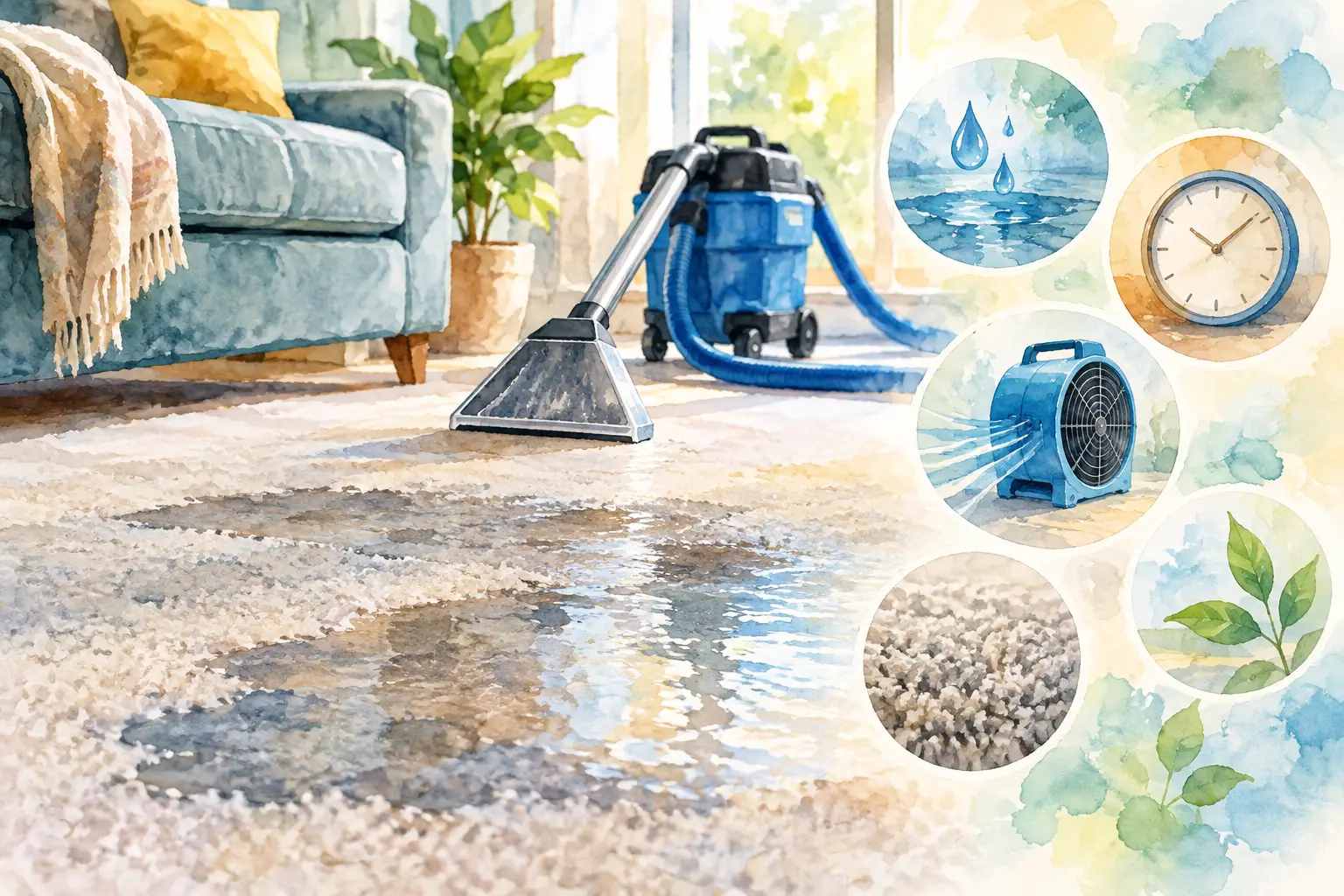
Clean-water damage discovered promptly is the best-case scenario. If a supply line leaks, a sink overflows, or rainwater enters through a roof opening, carpet may be restorable when extraction and drying begin quickly. In many cases, professional equipment can remove water from the carpet and pad, circulate dry air, and bring moisture levels back to an acceptable range.
Time changes the decision. A carpet that remains wet for more than 24 to 48 hours can develop odor, staining, backing separation, or microbial growth. Warm indoor temperatures, high humidity, and limited airflow speed up that process. Water can also travel well beyond the visible wet area, soaking baseboards, drywall, tack strips, and subfloor materials.
Carpet construction matters, too. Synthetic carpet is generally more likely to tolerate clean-water exposure than natural fibers such as wool. Even when the carpet itself can be cleaned and dried, the pad beneath it may need to be removed. Padding holds water like a sponge and is difficult to dry thoroughly, especially after a significant loss.
For commercial properties, the same principles apply on a larger scale. Wet carpet in an office, church, school, restaurant, or multifamily property can affect indoor air quality, employee safety, tenant satisfaction, and operations. Fast assessment helps decision-makers determine which areas can remain in service, which must be contained, and what restoration work is needed to reopen safely.
The Water Source Can Make Replacement Necessary
Not all water damage is treated the same way. The cleanliness of the water is one of the most important factors in deciding whether carpet can be restored.
Clean water
Clean water usually comes from a broken supply pipe, overflowing tub, appliance line, or rainwater that has not passed through contaminated materials. When addressed quickly, clean-water-affected carpet may be salvageable. Restoration professionals assess the affected area, extract water, inspect the pad and subfloor, and establish controlled drying conditions.
Gray water
Gray water may contain contaminants from sources such as washing machines, dishwashers, or toilet overflows without solid waste. It requires more caution because contamination levels can increase as water sits and moves through the property. Depending on the extent of the damage and the materials involved, carpet and padding may need to be removed rather than cleaned.
Sewage or other highly contaminated water
If sewage, toilet water containing waste, floodwater, or other visibly contaminated water has touched the carpet, replacement is generally the safer decision. Porous materials can absorb contaminants that cannot be reliably removed through ordinary cleaning. This is a health and safety issue, not a cosmetic one. Keep people and pets away from the area and arrange professional sewage cleanup as soon as possible.
What to Do Before Help Arrives
The first few hours matter. If the source of water can be stopped safely, do so. Turn off the supply valve to the affected appliance or fixture, or shut off the main water supply if necessary. For a roof or weather-related loss, protect the area only if it can be done without exposing anyone to unsafe conditions.
Avoid walking through wet rooms unnecessarily, especially if water may have reached electrical outlets, cords, or appliances. Do not use a standard household vacuum to remove water. If there is any possibility of sewage or contaminated water, do not attempt cleanup yourself.
For clean-water incidents, these steps can help limit damage while a restoration team is on the way:
- Move furniture, area rugs, boxes, and other contents off the wet carpet when it is safe to do so.
- Place foil, plastic blocks, or other barriers under furniture legs to reduce staining and wood damage.
- Remove lightweight items from the floor and document damaged belongings with photos.
- Use towels to absorb small amounts of standing water, but do not assume surface drying means the pad and subfloor are dry.
- Keep the HVAC system operating normally unless instructed otherwise, and avoid opening windows during humid weather.
Do not pull up carpet, remove baseboards, or discard materials before documentation if an insurance claim may be involved. Those actions can make it harder to identify the full extent of the loss. A qualified restoration team can document conditions, identify moisture migration, and help provide the information needed for the claims process.
Why Surface Drying Is Not Enough
A carpet can look dry while moisture remains trapped underneath. Water frequently spreads under the carpet and pad farther than it spreads across the surface. It can wick into drywall, insulation, wood flooring, cabinets, and structural materials, creating hidden conditions that lead to odor, warping, or mold growth later.
Professional drying is a measured process, not a guess. Technicians use moisture detection tools to identify affected materials, then use extraction equipment, air movers, and dehumidifiers to remove water and lower humidity. Readings are monitored throughout the job to confirm that materials are returning to appropriate drying targets.
This is also why rental fans are not always the right answer. Moving air without enough dehumidification can leave moisture in the building or push humid air into adjacent areas. In an already damp property, that may slow drying rather than improve it. The correct equipment setup depends on the size of the affected area, the type of materials, the amount of water, and current indoor conditions.
Assessment, Mitigation, and Restoration
A clear process brings order to a stressful situation. At ServiceMaster Restore by DCS, carpet water damage recovery begins with an assessment of the water source, affected materials, contamination risk, and moisture migration. That assessment determines whether the carpet can be restored or should be removed for health and safety reasons.
Mitigation comes next. The team extracts standing water, protects unaffected areas, removes unsalvageable materials when necessary, and sets up drying equipment. For commercial clients, containment and phased work can help reduce disruption to occupied spaces and critical operations.
Restoration focuses on returning the property to pre-loss condition. Depending on the loss, that may include cleaning and deodorizing salvageable carpet, replacing padding, repairing drywall or flooring, and managing reconstruction after demolition. Having one accountable provider from emergency response through rebuilding reduces the burden of coordinating separate vendors during an already difficult time.
Signs Your Carpet Should Not Be Saved
Replacement may be the better choice when carpet has been exposed to sewage or floodwater, has remained wet for an extended period, shows visible mold growth, carries a persistent musty odor after drying, or has delaminated backing. Affected padding is also commonly removed after significant water damage, even when the carpet is retained.
There is a trade-off to consider. Replacing carpet prematurely can add unnecessary expense, but trying to save contaminated or deteriorated materials can create continuing odor, health, and repair concerns. A documented professional assessment gives homeowners, facility managers, and insurance representatives a sound basis for the decision.
If your carpet is wet, treat the situation as time-sensitive even when the visible area seems small. Quick action can preserve more of the property, protect indoor conditions, and give you the best opportunity to restore what matters most.