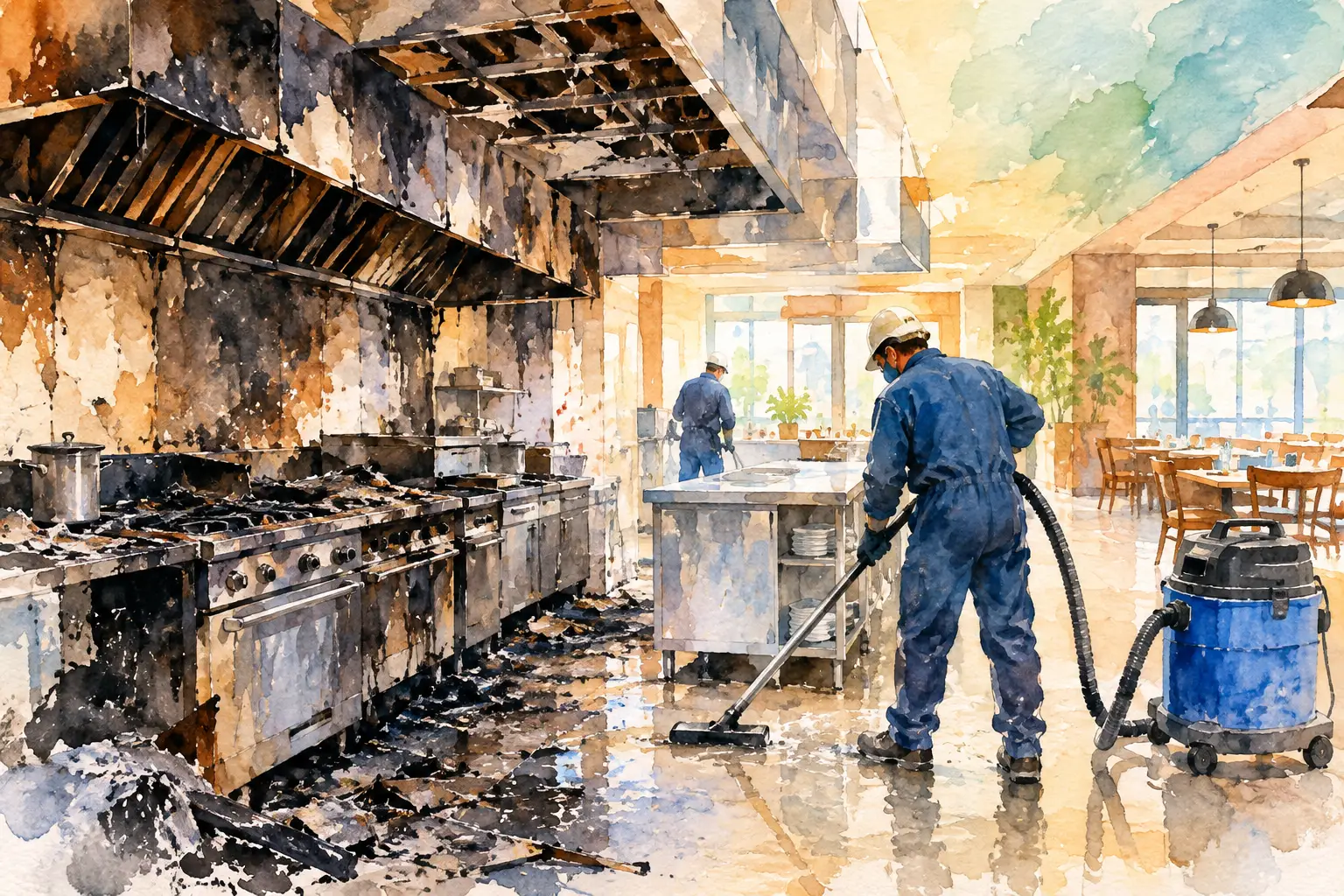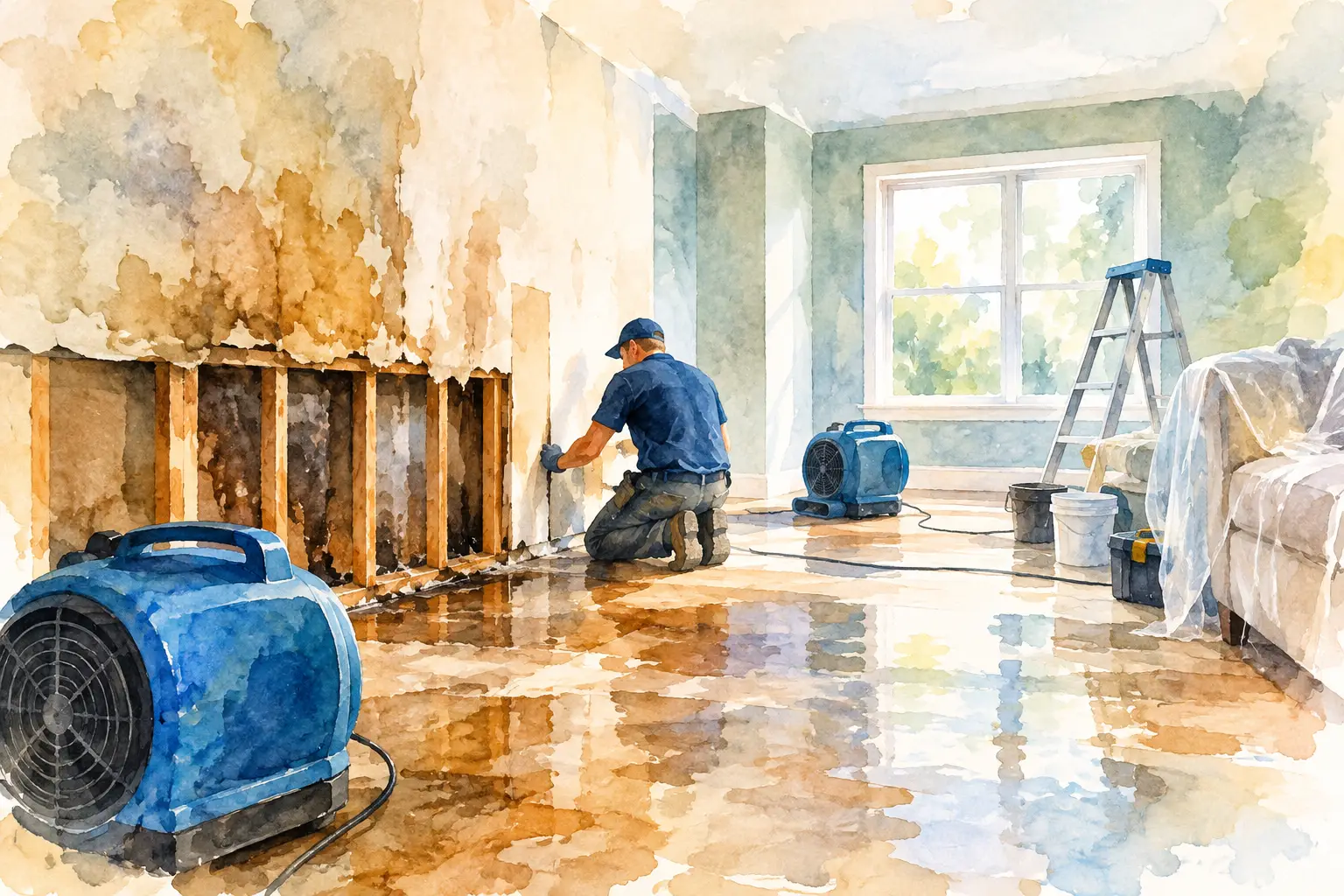
A kitchen fire can be extinguished in minutes, yet the disruption it leaves behind can keep a restaurant closed far longer. Restaurant fire restoration is not simply a matter of cleaning visible soot. It is a coordinated recovery effort that protects the building, equipment, inventory, staff, and the customer experience you have worked hard to build.
For restaurant owners, operators, and property managers, every day of closure affects payroll, suppliers, reservations, and community trust. The right response begins immediately: secure the site, stop additional damage, document the loss, and create a practical path to reopening.
Why Restaurant Fire Restoration Requires a Different Approach
Restaurants have fire risks and recovery challenges that other commercial properties may not. Grease, high-heat cooking equipment, electrical systems, ventilation hoods, combustible packaging, and tightly scheduled operations can all complicate a loss. Even a contained fire can send smoke and soot through the dining room, storage areas, offices, ceiling cavities, and HVAC system.
A fire also creates secondary damage. Water or chemicals used to extinguish the fire may soak floors, drywall, insulation, and equipment. If that moisture is not extracted and dried correctly, mold growth and material deterioration can become additional concerns. Smoke residue can corrode metal surfaces, stain finishes, and leave odors that customers notice immediately.
The goal is not to make the space look acceptable at a glance. It is to restore a clean, safe, functional restaurant that supports health requirements, employee confidence, and a positive guest experience.
The First Hours After a Restaurant Fire
Once the fire department has cleared the property for entry, the next decisions matter. Do not turn on electrical equipment, HVAC systems, hood systems, or appliances until qualified professionals determine they are safe. Avoid wiping soot with standard cleaning products. Improper cleaning can push oily residue deeper into porous materials or spread contamination to unaffected surfaces.
Start by documenting the damage. Take photographs and video of affected areas, equipment, inventory, furnishings, and exterior conditions before moving items when it is safe to do so. Keep records of emergency expenses, lost inventory, temporary equipment rentals, and communications with vendors. This documentation can support the insurance claim and help establish a clear recovery scope.
It is also wise to secure the building. Fire-damaged doors, windows, roofing, and wall openings can leave a restaurant exposed to weather, theft, or unauthorized entry. Emergency board-up and temporary roof protection help prevent the original loss from becoming larger.
Protect Food, Packaging, and High-Touch Items
Food safety should be handled conservatively after a fire. Smoke, soot, firefighting chemicals, and water can compromise exposed food, open containers, paper goods, and single-use packaging. Refrigerated and frozen products may also be at risk if power was interrupted or temperatures were not maintained.
A restoration team can help identify affected contents, separate salvageable property from damaged materials, and document the process. Decisions about food and inventory should align with local health department guidance and your insurer’s requirements. When there is uncertainty, protecting public health and your reputation should come first.
A Three-Step Restaurant Fire Restoration Process
A structured recovery process gives owners and operators control during a difficult time. At ServiceMaster Restore by DCS, restoration work follows three essential stages: assessment, mitigation, and restoration. Each step informs the next, helping avoid delays, missed damage, and unnecessary disruption.
1. Assessment: Find the Full Scope of Damage
The visible burn area rarely tells the whole story. During the assessment, trained technicians inspect fire, smoke, water, and odor damage throughout the restaurant. They evaluate walls, ceilings, floors, ductwork, kitchen systems, furniture, fixtures, equipment, and contents.
This stage may include moisture detection, residue testing, odor evaluation, and an assessment of structural conditions. The team also identifies what can be cleaned and restored versus what requires replacement. For a restaurant, this can include specialized consideration for exhaust hoods, cooking lines, walk-in coolers, point-of-sale areas, dining room finishes, and back-of-house storage.
A detailed scope creates a clearer roadmap for property owners, managers, insurers, and contractors. It also helps prioritize work that can shorten downtime, such as securing the property, removing damaged materials, and restoring critical operational systems.
2. Mitigation: Stop Damage From Spreading
Mitigation is the urgent work that stabilizes the loss. It can include emergency board-up, water extraction, structural drying, debris removal, content pack-out, and temporary power or climate control when appropriate. The purpose is to protect what remains and prevent conditions from getting worse.
Smoke and soot removal are central to this phase. Different fires leave different residues. A protein fire from burned food can produce a nearly invisible but intensely odorous film. Grease fires often leave sticky, oily residues. Fires involving plastics or synthetic materials can create corrosive soot that requires careful handling. Cleaning methods must match the residue and the surface being treated.
Technicians may use HEPA vacuuming, dry cleaning techniques, wet cleaning, specialized degreasers, abrasive cleaning where appropriate, and controlled deodorization methods. HVAC components require particular attention because contaminated ductwork can redistribute smoke odor and fine particles after reopening.
3. Restoration: Rebuild for a Safe Reopening
Restoration returns the space to pre-loss condition. Depending on the damage, this may involve repairing drywall, ceilings, flooring, cabinetry, paint, electrical components, plumbing, ventilation, and kitchen finishes. Some losses require limited repairs; others require substantial reconstruction.
For restaurant operations, sequencing is critical. A dining room may be ready before the kitchen. The kitchen may be structurally sound but unable to operate until hood systems, appliances, fire suppression equipment, gas lines, or electrical systems have been inspected and approved. A capable restoration partner coordinates the work so decisions are made with reopening requirements in mind, not just construction convenience.
Smoke Odor Is More Than a Comfort Issue
Guests may forgive a temporary closure. They are less likely to return to a dining room that smells like smoke. Odor can linger in upholstery, ceiling tiles, wall cavities, carpets, wood, insulation, and HVAC systems long after visible soot is gone.
Masking the odor with fragrance is not restoration. Effective odor control begins with removing the odor source through proper cleaning and removal of unsalvageable materials. Depending on conditions, additional deodorization may use hydroxyl treatment, ozone treatment in unoccupied areas, thermal fogging, or sealing of treated structural surfaces. The method depends on the materials affected, the type of fire, occupancy needs, and the extent of contamination.
The trade-off is speed versus certainty. Reopening too quickly without addressing hidden smoke contamination can lead to complaints, repeat cleaning, and a damaged guest impression. A thorough odor assessment helps avoid that outcome.
Keeping the Recovery Moving
Restaurant owners are often managing several urgent priorities at once: employees asking about schedules, vendors needing direction, insurers requesting information, and customers looking for reopening updates. Clear communication keeps restoration from becoming another source of stress.
Choose a provider that can manage emergency mitigation, cleaning, contents handling, odor control, and reconstruction under one accountable recovery plan. This reduces handoffs between vendors and helps maintain continuity from the first emergency call through final repairs. Insurance familiarity also matters. Detailed documentation, photos, estimates, and regular updates can make the claims process easier to navigate.
If your restaurant operates in a leased space, involve the landlord or property manager early. Responsibility for structural repairs, building systems, and tenant improvements can vary by lease. Early coordination helps prevent approval delays and clarifies which work can begin immediately.
Planning Before the Next Emergency
No restaurant can remove every fire risk, but preparation can reduce loss severity and confusion. Maintain hood and duct cleaning schedules, service fire suppression systems, inspect extinguishers, train staff on emergency procedures, and keep updated records for equipment, inventory, vendors, and insurance contacts.
A continuity plan should identify who can authorize emergency work, where utility shutoffs are located, how staff will communicate, and what steps are needed to protect food and customer data. For multi-location operators, a consistent response plan can make a major difference when managers are dealing with an active incident.
A restaurant fire affects far more than walls and equipment. It interrupts livelihoods, routines, and the place where your team serves the community. Fast, organized restoration helps protect what matters most and gives your operation a stronger path back to service.