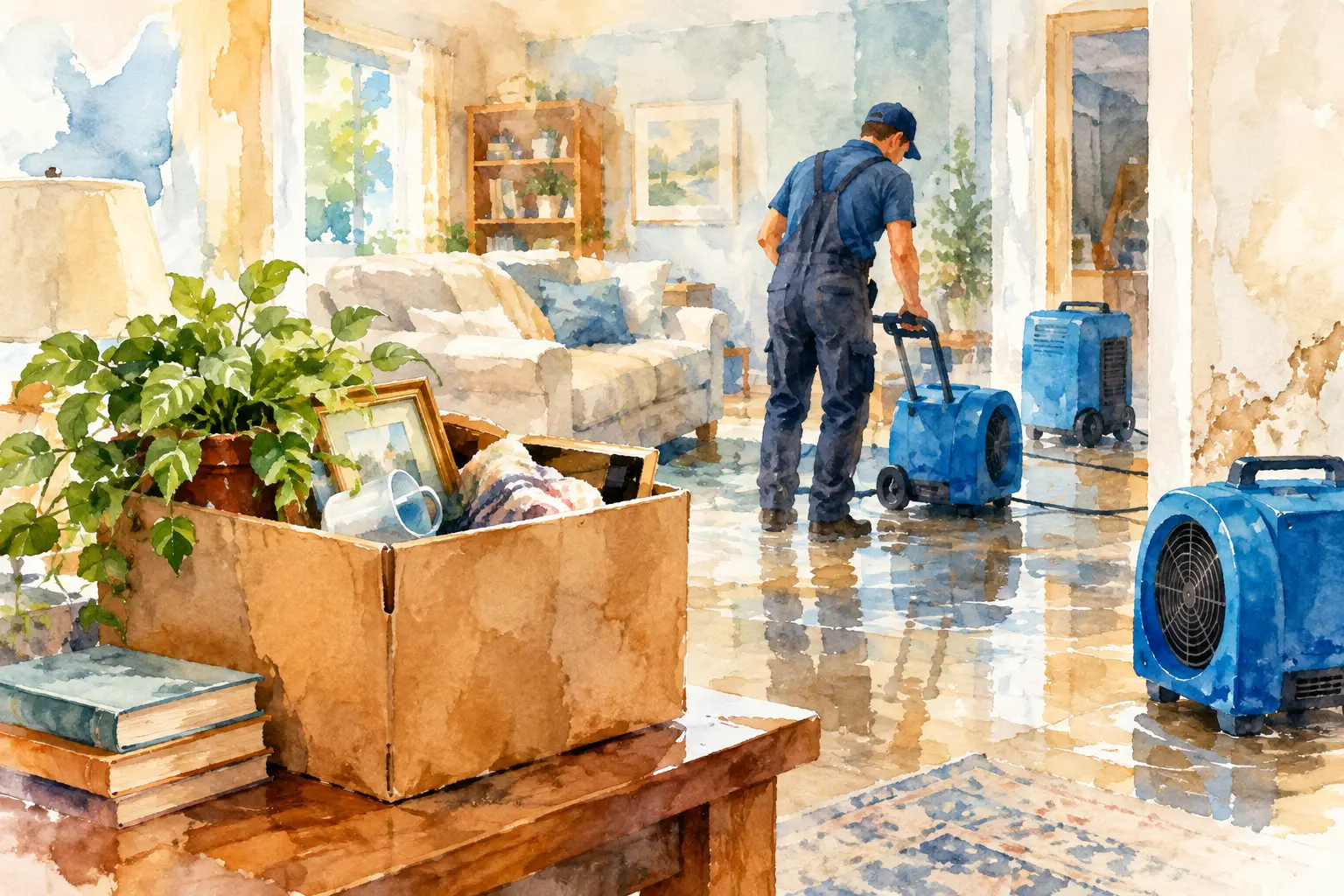

A small supply-line drip behind a vanity can become a mold problem before a homeowner ever sees standing water. A roof leak above a ceiling tile can quietly spread moisture across insulation and framing. For homes, businesses, churches, restaurants, and warehouses, preventing mold after a leak comes down to one priority: find the moisture, stop it, and dry affected materials completely before mold has time to grow.
The first 24 to 48 hours matter most. Mold does not require a flood to take hold. It needs moisture, a surface with organic material such as drywall paper, wood, dust, carpet backing, or insulation, and time. A fast, organized response protects the building, its contents, and the people who use the space.
Why a Leak Can Turn Into a Mold Problem
Water travels farther than most people expect. It can move beneath flooring, along wall cavities, into cabinets, under baseboards, and through insulation. What looks like a contained leak on the surface may be affecting materials out of sight.
Drywall is especially vulnerable because its paper facing can retain moisture. Carpet padding, ceiling tiles, particleboard cabinets, upholstered furnishings, and insulation can also hold water long after the visible puddle is gone. Simply running a household fan across a wet area may dry the surface while leaving moisture trapped underneath.
The right response depends on the source, duration, and category of water. A clean-water leak from a broken supply line may allow more materials to be dried and saved if addressed immediately. Water from a drain backup, toilet overflow involving waste, or outside flooding requires more careful handling because contamination may be present. In those cases, protecting occupants and properly removing affected materials may be safer than trying to dry everything in place.
Preventing Mold After a Leak: The First 48 Hours
Start by stopping the water source. Shut off the local valve or main water supply if necessary, place containers under an active drip only when it is safe to do so, and arrange for plumbing or roof repair. Drying cannot succeed while water continues entering the building.
Next, consider safety before entering or cleaning the affected area. Turn off electricity to the area if water is near outlets, appliances, electrical panels, or wiring. Avoid walking on sagging ceilings, which can collapse under the weight of trapped water. If the loss involves sewage, floodwater, or a large area of water, keep people and pets away until the situation can be evaluated.
Remove standing water as quickly as possible. Towels, wet vacuums, mops, and pumps can help with a minor, clean-water event. Move furniture, boxes, rugs, and other contents off wet flooring when possible. Place aluminum foil or plastic blocks beneath furniture legs to limit staining and moisture transfer. Do not drag heavy furniture across wet carpet, and do not use a regular household vacuum on water.
Then begin controlled drying. Open interior doors and cabinet doors to increase air movement. Use fans and dehumidifiers where conditions allow, but understand their limits. In humid weather, opening windows can bring additional moisture inside. For a larger loss, restoration-grade air movers, dehumidifiers, and moisture-monitoring equipment are designed to dry structural materials in a controlled way.
Take photos and make notes before discarding damaged items, especially if insurance may be involved. Document the source of the leak, affected rooms, visible damage, and emergency steps taken. Clear records can support the claims process and give restoration professionals a better picture of what happened.
Drying Is More Than Making a Room Feel Dry
A room can feel dry and still contain moisture in the places that matter. Professional mitigation teams use moisture meters, thermal imaging, and humidity readings to identify wet materials and track whether they are actually reaching drying goals. This is particularly valuable after water has reached wall cavities, hardwood flooring, carpet padding, crawl spaces, or commercial building assemblies.
Some materials can be dried effectively when response is fast and water is clean. Hardwood flooring, for example, may be stabilized with the correct drying setup before warping becomes permanent. Other materials, including swollen particleboard, heavily saturated insulation, or porous items exposed to contaminated water, may need removal. The decision should be based on moisture levels, material condition, contamination risk, and the likelihood of restoring the space safely.
For commercial properties, drying strategy also affects downtime. A restaurant with water near food-service areas, a warehouse with wet inventory, or an office with affected electrical equipment needs a plan that considers sanitation, safety, operations, and documentation. Fast action helps preserve more, but it should not compromise safe reopening.
Warning Signs That Moisture Is Still Present
Do not assume the problem is over because the leak has stopped. Watch the area over the following days and weeks. A musty odor, peeling paint, bubbling walls, warped trim, soft drywall, discolored grout, or recurring condensation can point to hidden moisture.
Visible mold may appear as small dark, green, gray, or white spots, but color alone does not identify the type or severity of growth. More importantly, mold can be growing behind a wall, beneath flooring, or inside an HVAC component without being visible. If an odor persists after cleaning and drying, or if building materials remain damp beyond a day or two, an inspection is a prudent next step.
People with allergies, asthma, or respiratory sensitivities may notice symptoms sooner in a damp environment. That does not confirm the source, but it is a reason to take persistent moisture and odor seriously. The goal is not to cover the smell with fragrance. The goal is to locate and correct the moisture condition causing it.
Common Mistakes That Let Mold Return
One frequent mistake is cleaning visible staining without addressing the water source. Bleach or surface cleaners may change the appearance of a spot, but they do not dry wet drywall, carpet backing, or wall cavities. Painting over water stains can also hide evidence while moisture remains active behind the finish.
Another is delaying action on a slow leak. A small drip under a sink, around a window, or from a rooftop penetration can create significant damage over time. Check beneath sinks, around water heaters, near appliances, in utility rooms, and above suspended ceilings regularly. Facility managers should include these areas in routine maintenance walkthroughs, especially after storms or plumbing work.
Overlooking contents is also costly. Cardboard boxes, stored textiles, paper files, and upholstered items absorb moisture quickly. Move them away from affected areas and assess them separately. For businesses, segregating inventory and records early can reduce unnecessary loss and make recovery decisions more manageable.
Finally, do not seal wet materials inside a building assembly. Reinstalling baseboards, closing wall openings, laying new flooring, or replacing ceiling tiles before the underlying materials are dry can trap moisture and create conditions for mold growth later.
When to Call a Restoration Professional
A minor spill on a hard, nonporous floor may be manageable with prompt cleanup and drying. A professional assessment becomes more valuable when water has been present for more than 24 to 48 hours, has entered walls or flooring, involves a large area, comes from sewage or flooding, or has caused a persistent odor or visible mold.
It is also wise to call when a leak affects a commercial property, multi-unit building, finished basement, crawl space, or area with valuable contents. These losses often involve hidden spread, operational concerns, and a need for clear documentation. A coordinated restoration team can assess the damage, contain affected areas, remove water, dry structural materials, clean contents, and manage repairs when needed.
ServiceMaster Restore by DCS provides 24/7/365 response for property owners across Illinois and southeastern Wisconsin. The process begins with assessment, moves quickly into mitigation to limit additional damage, and continues through restoration so customers are not left coordinating separate emergency, cleaning, and reconstruction providers.
A leak is disruptive, but it does not have to become a long-term mold problem. Acting quickly, verifying that materials are truly dry, and bringing in experienced help when moisture has spread can protect the space and help restore what matters most.