Smoke odor is not just an unpleasant reminder of a fire. It is a sign that smoke particles may still be settled in walls, insulation, furnishings, HVAC components, and other hidden areas. Knowing how to remove smoke odor starts with addressing the residue that caused it, not simply covering the smell with air fresheners.
For a small, contained cooking incident, careful cleaning may solve the problem. After a structure fire, electrical fire, furnace puffback, or widespread smoke event, the work is more complex. Smoke travels quickly through a property, and its odor can return days or weeks later if affected materials are not properly cleaned, sealed, or removed.
Why Smoke Odor Is So Difficult to Remove
Smoke contains microscopic particles and gases that cling to surfaces. Those particles can penetrate porous materials such as drywall, carpet padding, upholstered furniture, clothing, unfinished wood, insulation, and ceiling tiles. Heat can also drive smoke deeper into those materials.
The type of fire matters. Protein smoke from burned food can leave a stubborn, nearly invisible residue. Wood and paper fires often create dry soot that spreads easily. Synthetic materials, plastics, and fabrics can produce oily residues with a sharp chemical odor. Each situation calls for a different cleaning approach.
That is why opening windows, spraying deodorizer, or painting over visible staining often provides only temporary relief. If the residue remains underneath, changes in temperature or humidity can release the odor again.
Start With Safety and Damage Control
Before cleaning, make sure the property is safe to enter. If the fire department, utility provider, or another authority has restricted access, wait for clearance. Do not turn on HVAC equipment until it has been inspected if smoke may have entered the system. Running the system can distribute soot and odor through clean areas of the home or building.
Wear appropriate personal protective equipment when handling soot-affected materials. At a minimum, use gloves, eye protection, and a properly fitted mask rated for fine particles. Avoid dry sweeping or using a standard household vacuum on soot. Both can push particles into the air and spread contamination to additional surfaces.
If water was used to extinguish the fire, address moisture promptly as well. Wet carpet, insulation, drywall, and contents can create a separate mold risk. Effective recovery requires controlling both smoke damage and water damage from firefighting efforts.
How to Remove Smoke Odor From Hard Surfaces
For limited smoke exposure, begin by removing loose soot with a HEPA vacuum and a soft brush attachment. Hold the nozzle slightly above the surface instead of rubbing soot into it. Dry chemical sponges, often called soot sponges, can also lift surface soot from walls, ceilings, and painted trim when used with light, straight wiping motions.
After dry removal, clean washable surfaces with a cleaner suited to the material and the type of residue. Painted walls, sealed wood, metal, tile, glass, and countertops may be cleaned using a mild degreasing solution. Test an inconspicuous area first, especially on matte paint, natural stone, older finishes, and wood cabinetry.
Work from the ceiling downward. Smoke rises during a fire, so ceilings, upper walls, light fixtures, and the tops of cabinets may hold more contamination than lower surfaces. Change cleaning cloths and solution often. Reusing dirty water can redeposit soot and leave the odor behind.
Do not rush to repaint. Paint can trap odor if the surface has not been thoroughly cleaned. When staining or odor remains after proper cleaning, a restoration professional may use a specialized odor-blocking primer before repainting.
Treat Soft Materials and Contents Carefully
Soft goods are often the biggest challenge because smoke settles deep into fibers. Washable clothing, linens, and curtains should be separated from unaffected items and cleaned according to their care labels. A regular wash cycle may not be enough for heavily affected fabrics, and some items need professional textile restoration.
Carpet requires more than surface shampooing when smoke has reached the padding or subfloor. In a minor incident, HEPA vacuuming followed by appropriate hot-water extraction may help. In a significant fire, the carpet pad, tack strips, or carpet itself may need removal because odor can remain trapped underneath.
Upholstered furniture, mattresses, paper records, books, electronics, and artwork require special consideration. Applying household cleaners, vinegar, fragrance sprays, or excessive moisture can permanently damage these items. Electronics should not be powered on until they have been evaluated, since soot residue can be corrosive and conductive.
Do Not Forget the HVAC System
An HVAC system can turn a localized smoke event into a whole-property odor problem. Smoke particles may collect in return vents, ductwork, air handlers, filters, and coils. Replacing the filter is a sensible first step, but it is not always enough after a fire.
Keep the system off until a qualified professional determines whether cleaning is needed. Depending on the extent of damage, recovery may include cleaning accessible HVAC components, addressing duct contamination, and replacing affected filters. This helps prevent the system from reintroducing odor after the rest of the property has been cleaned.
Odor Removal Requires More Than Fragrance
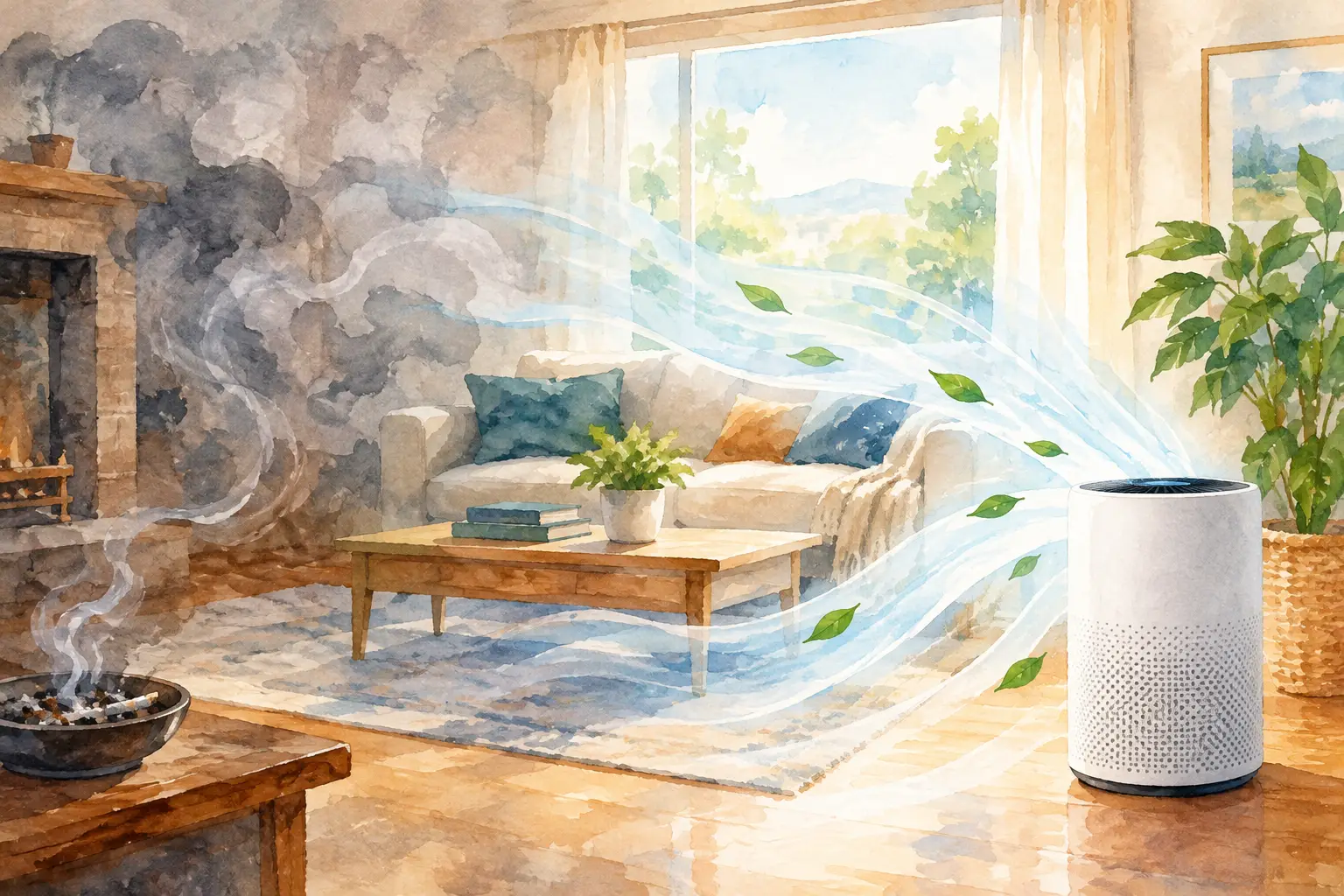
Odor-control products have different jobs. Some products mask a smell temporarily, while others neutralize odor molecules or help remove airborne particles. Fragrance alone does not restore a smoke-damaged space.
Professional restoration teams may use controlled deodorization methods such as thermal fogging, hydroxyl treatment, ozone treatment, or sealing. These are not interchangeable, and they should be selected based on the fire source, materials affected, occupancy needs, and safety requirements. Ozone, for example, can be effective in certain unoccupied spaces but requires strict controls and should never be used around people, pets, or plants.
The best method depends on whether the odor source has been removed. Deodorization works after thorough cleaning and removal of unsalvageable materials, not as a substitute for those steps.
When DIY Cleanup Is Not Enough
Call a professional fire and smoke restoration team when odor is widespread, soot is visible on walls or ceilings, smoke entered the HVAC system, or the fire involved plastics, wiring, insulation, or other synthetic materials. Professional help is also appropriate when a business needs to reopen quickly, when sensitive inventory or equipment is involved, or when occupants have respiratory concerns.
A structured restoration process begins with an assessment of the fire source, soot type, affected materials, moisture conditions, and air movement throughout the property. The next phase is mitigation: containing contaminated areas, protecting unaffected contents, removing damaged materials, and stopping odor migration. Restoration then focuses on detailed cleaning, deodorization, repairs, and reconstruction as needed.
Documentation matters, particularly for insurance claims and commercial recovery. Photos, moisture readings, itemized contents records, and a clear scope of work help establish what was affected and support a more organized recovery. For property owners across Illinois and southeastern Wisconsin, ServiceMaster Restore by DCS can coordinate these steps from emergency response through reconstruction.
Avoid These Common Smoke Odor Mistakes
A few well-intended actions can make smoke odor harder to eliminate. Avoid washing soot-covered walls with water before dry soot removal, because moisture can smear residue into the finish. Do not use ceiling fans to air out a smoke-damaged room, since they can spread particles. Avoid laundering smoke-damaged clothes with clean clothes, and do not place contaminated textiles in a dryer until the odor has been removed.
It is also wise to avoid discarding everything immediately. Some items that look heavily affected can be restored with the right process, while some seemingly clean porous materials may hold odor that cannot be reliably removed. An assessment helps make those decisions based on condition, cost, safety, and sentimental or operational value.
A smoke odor-free property comes from a complete recovery plan: remove the source, clean the residue, treat hidden pathways, and verify that odor does not return. Acting quickly protects the space, the people who use it, and the routines that matter most.