
A basement flood can change from an inconvenience to a serious property loss in a matter of hours. Knowing how to dry a flooded basement safely means more than removing visible water. The goal is to stop the source, protect people and belongings, dry materials below the surface, and prevent mold, odor, and structural damage from taking hold.
For homeowners, the urgency is obvious. For property managers and business owners, a wet lower level can also disrupt tenants, inventory, equipment, records, and operations. A fast, organized response helps restore what matters most.
Start With Safety Before Entering the Basement
Do not enter a flooded basement until you know it is safe. Standing water near outlets, appliances, electrical panels, furnaces, or extension cords can create a severe shock hazard. If the water is high, the power is on, or you are unsure where the water came from, stay out and contact an electrician or water damage professional.
The water source matters just as much as the depth. Clean water from a broken supply line may be manageable if it is addressed immediately. Water from a backed-up drain, toilet overflow, sewer line, groundwater intrusion, or outdoor flooding may contain contaminants. This is not a cleanup project to handle with a household shop vacuum and a few fans. Avoid contact with contaminated water, keep children and pets away, and use appropriate protective equipment if entry is necessary.
If the flooding followed a storm, check for foundation cracks, downed power lines, gas odors, and unstable walls before approaching the property. Never operate a generator inside the home, garage, basement, or near open windows.
Stop the Water Source and Document the Damage
Once the area is safe, stop additional water from entering whenever possible. Shut off the main water supply for a burst pipe or failed appliance line. If rainwater is entering through a window well, door, or foundation opening, use temporary measures only if conditions are safe. During widespread storms, rising groundwater and overwhelmed drainage systems may continue to introduce water until weather conditions improve.
Before moving items, document the damage with photos and video. Capture the water level, affected rooms, damaged furniture, appliances, wall finishes, and any visible source of the problem. Keep a simple record of what was damaged and when the loss occurred. This information can support an insurance claim and help a restoration team create a clear scope of work.
Do not throw away damaged materials immediately unless they pose a health or safety risk. Your insurance carrier may need documentation, and a restoration professional can help identify what can be cleaned and restored versus what needs to be removed.
How to Dry a Flooded Basement: Remove Water Quickly
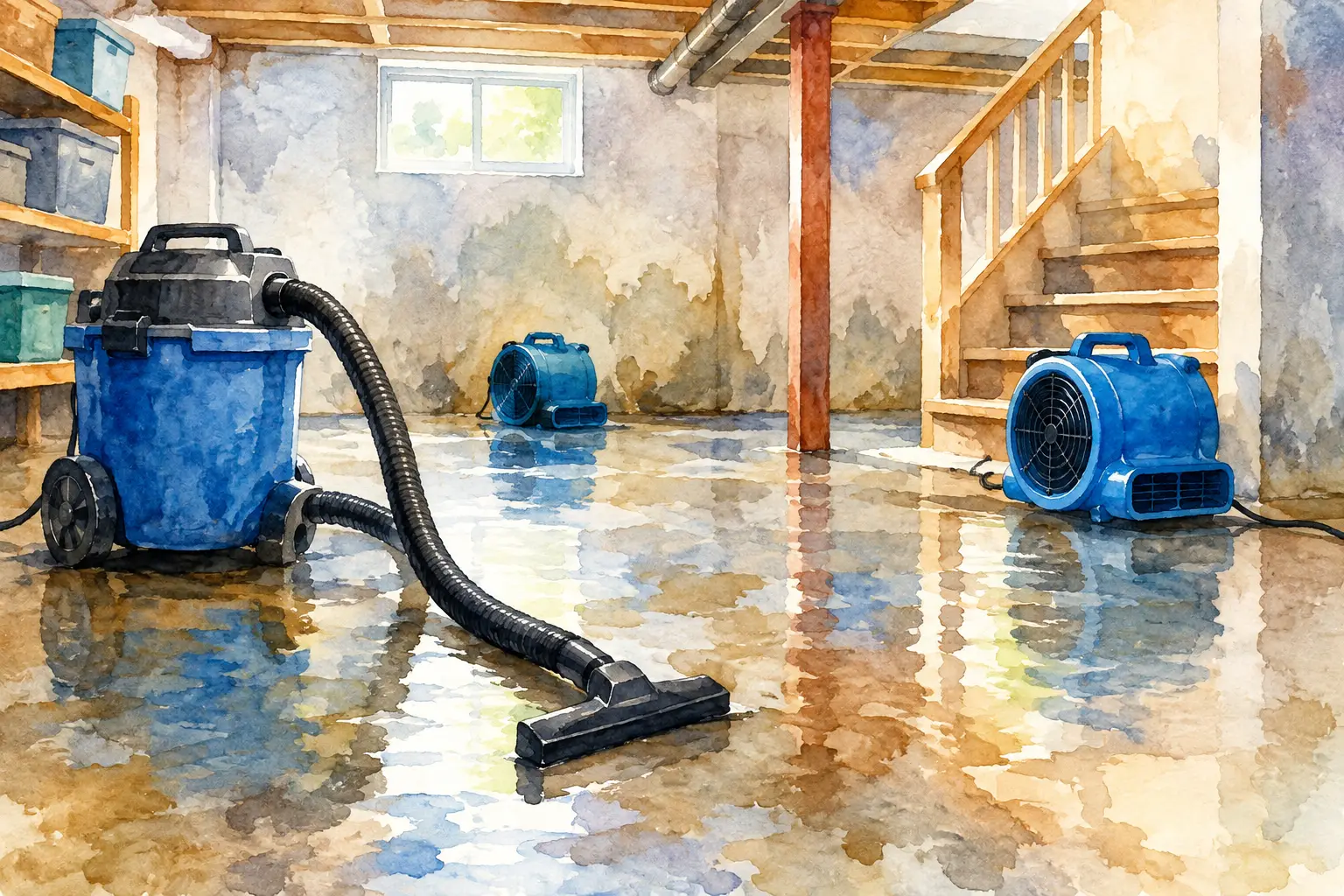
Standing water should be extracted as soon as possible. For a small amount of clean water, a wet/dry vacuum may help. Larger losses usually require commercial extraction equipment, especially when water has spread across finished flooring, entered wall cavities, or soaked stored contents.
If water is several inches deep, a submersible pump may be needed. Pumping out a basement is not always as simple as removing everything at once. When exterior groundwater remains high, rapidly emptying the basement can create pressure differences that contribute to foundation damage. A professional can assess conditions and determine the safest pumping approach.
Move dry, undamaged belongings to a clean area. Raise furniture off wet carpet or flooring where possible, and separate wet items so air can circulate around them. Cardboard boxes, paper records, upholstered furniture, mattresses, insulation, and fabrics can hold moisture long after the floor looks dry. Those materials need prompt attention to prevent odor and microbial growth.
Avoid using a standard household vacuum on standing water. Do not use electrical appliances in wet areas, and do not run central HVAC equipment if water may have affected ductwork, mechanical systems, or electrical components.
Dry More Than the Floor
Visible water removal is only the first stage of mitigation. Concrete may look dry while moisture remains in carpet padding, baseboards, drywall, insulation, wood framing, and contents. That hidden moisture is why a basement can develop a musty odor or mold problem days after a flood appears to be resolved.
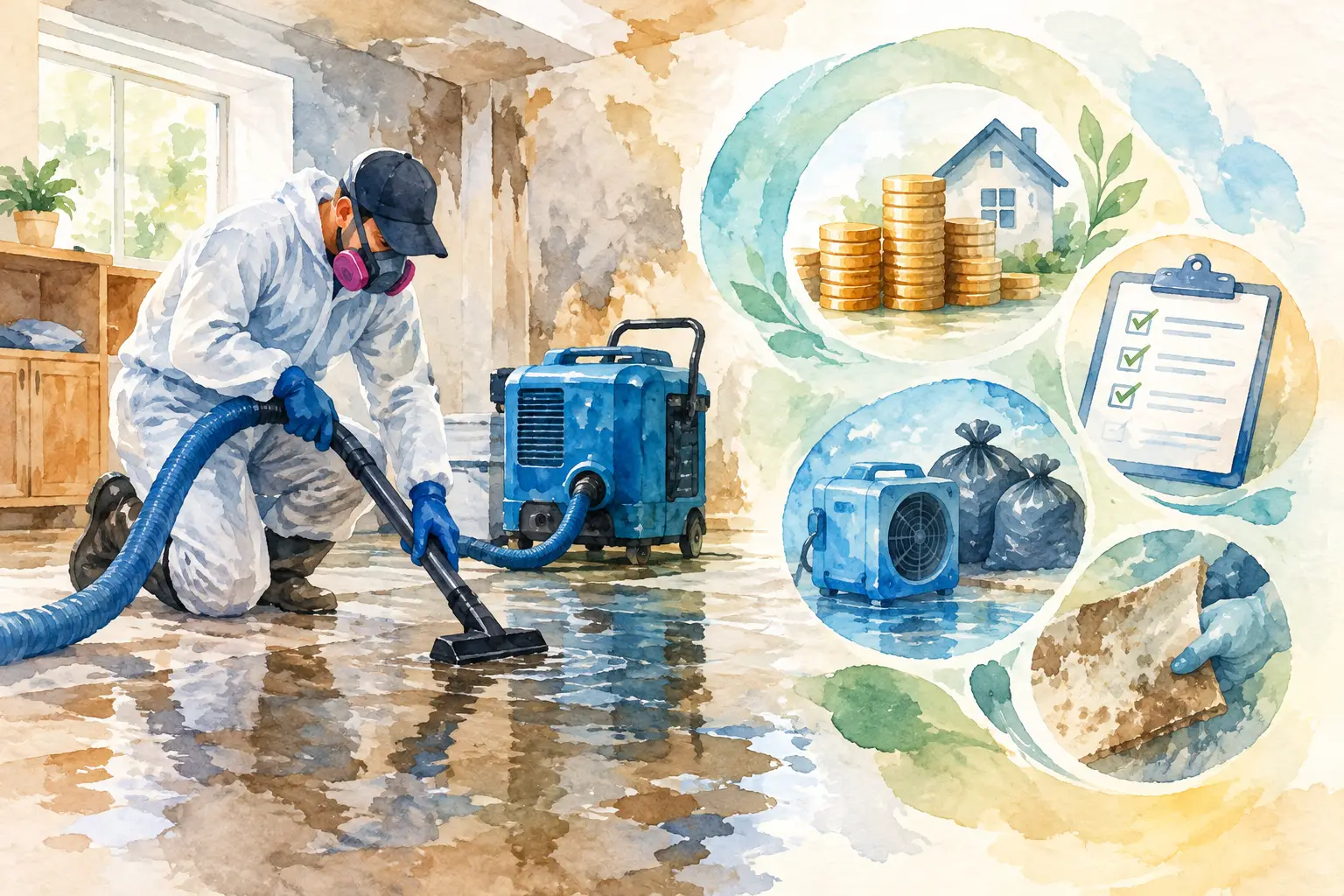
Effective drying requires controlled airflow, dehumidification, and moisture monitoring. High-velocity air movers help evaporate moisture from surfaces, while commercial dehumidifiers pull that moisture from the air. In a finished basement, technicians may need to remove baseboards, drill small access holes, lift carpet, or remove wet padding and drywall to dry structural materials properly.
Opening windows can help in some situations, but it is not a universal solution. On a humid Chicagoland summer day, outdoor air may introduce more moisture than it removes. In cold weather, open windows can create other risks. The right drying plan depends on the season, the source and category of water, the materials affected, and the size of the loss.
Professional moisture meters and thermal imaging tools provide information that touch and appearance cannot. They help establish a drying target, identify wet areas behind finishes, and confirm when the structure has returned to an acceptable moisture level.
Remove Materials That Cannot Be Safely Restored
Some materials can be cleaned and dried. Others should be removed, particularly after sewage contamination or prolonged saturation. Wet carpet padding is commonly discarded because it holds water and contaminants. Saturated insulation, damaged particleboard furniture, warped laminate flooring, and porous belongings exposed to sewage often cannot be safely restored.
Drywall can sometimes be saved after a clean-water loss caught quickly. However, if it has wicked water upward, softened, swollen, or been exposed to contaminated water, affected sections may need removal. This allows framing and wall cavities to dry and creates access for cleaning and treatment.
Do not assume demolition is always necessary, but do not delay necessary removal in hopes that surface fans will solve the problem. The practical decision is based on material type, water category, exposure time, and moisture readings.
Prevent Mold During the First 24 to 48 Hours
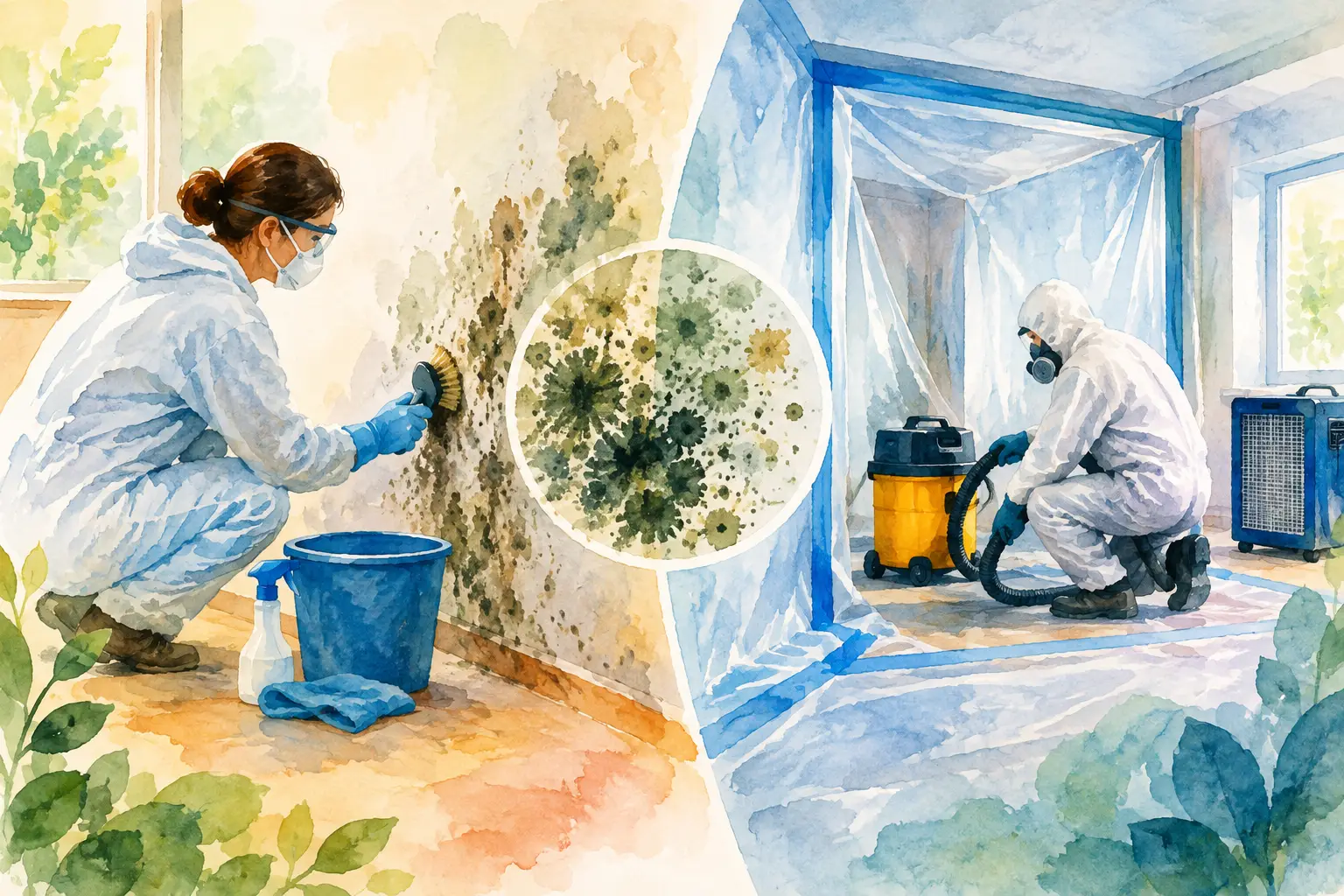
Mold growth can begin quickly when moisture remains in a warm, enclosed space. The best prevention is immediate extraction, thorough drying, and removal of materials that cannot be dried or cleaned. Spraying fragrance, bleach, or a consumer mold product over damp materials does not correct the underlying moisture problem.
Watch for earthy odors, visible discoloration, peeling paint, swollen trim, or persistent humidity after the initial cleanup. These signs can indicate moisture behind walls, under flooring, or inside contents. If mold is already visible or the affected area is extensive, professional assessment is the safer path.
After the basement is dry, address the condition that allowed flooding to happen. Depending on the cause, that may include repairing plumbing, servicing a sump pump, clearing gutters, extending downspouts, improving grading, sealing openings, or installing a battery backup for critical pumping equipment. A restoration plan should protect the building now and reduce the chance of another loss.
When to Call a Professional Water Damage Team
A professional response is strongly recommended when the water is contaminated, the source is unknown, the flooded area is large, or water has reached finished walls, flooring, electrical systems, HVAC equipment, or valuable contents. It is also the right call when water has been present for more than a few hours, especially in a warm basement.
For commercial properties, rapid response can limit downtime and protect business records, inventory, equipment, and tenant areas. A coordinated restoration partner can document the loss, contain damage, manage drying, clean affected contents, communicate with insurance representatives, and coordinate reconstruction when repairs are required.
ServiceMaster Restore by DCS provides 24/7/365 emergency response for water damage across Illinois and southeastern Wisconsin. The recovery process begins with assessment, moves into mitigation and drying, and continues through restoration so property owners are not left coordinating separate cleanup and rebuilding providers.
A flooded basement is stressful, but the next step does not have to be uncertain. Prioritize safety, remove water quickly, verify that materials are actually dry, and bring in experienced help when the loss is beyond a small, clean-water spill.