
A warehouse can look dry at floor level while water is moving through racking bases, wall cavities, electrical pathways, and stored materials. This warehouse water damage guide is built for facility managers, property owners, and operations leaders who need to protect people, inventory, equipment, and business continuity when a leak, burst pipe, roof failure, or flood disrupts the building.
The first hours shape the outcome. Fast action can reduce the amount of inventory lost, prevent mold growth, preserve documentation for insurance, and shorten the time before normal shipping, receiving, or production can resume. The right response is not simply removing visible water. It is controlling the source, identifying hidden moisture, stabilizing the environment, and creating a clear path back to safe operations.
Why Warehouse Water Damage Escalates Quickly
Warehouses have conditions that make water losses harder to manage than a typical office leak. Large floor areas allow water to travel farther than expected. High ceilings and expansive roof systems can conceal a slow leak until ceiling insulation, stored goods, or electrical components have already been affected. Floor drains, loading docks, expansion joints, and exterior grading can also direct water into unexpected areas.
Inventory creates another layer of risk. Cardboard packaging can wick water upward, pulling moisture into products that never touched standing water. Palletized goods may appear unaffected until lower layers are unpacked. Water can also compromise labels, barcodes, paper records, food products, pharmaceuticals, electronics, textiles, and other materials with specific handling requirements.
Downtime is often the largest cost. A contained loss in a shipping lane may be manageable, while a loss affecting electrical rooms, forklift routes, cold storage, server equipment, or a primary loading area can halt a large part of the operation. The response should be scaled to the source, the water category, affected materials, and the operational function of the space.
The First Response: Protect People and Stop the Spread
Before recovery work begins, protect employees, visitors, and emergency responders. Restrict access to wet zones, especially where there may be slip hazards, unstable materials, contaminated water, or electrical exposure. Do not allow staff to move through pooled water near outlets, panels, machinery, or extension cords.
If it is safe to do so, stop the water source. That may mean closing a localized supply valve, shutting down a process line, securing a loading dock door, or calling a plumber to address a broken pipe. For roof leaks during severe weather, temporary containment may be the only immediate option until conditions allow a permanent repair.
Facility leaders should also take these early actions:
- Move unaffected inventory, records, and portable equipment away from the impacted area.
- Photograph standing water, damaged goods, visible source conditions, and affected building areas before extensive cleanup begins.
- Notify building ownership, risk management, and your insurance carrier according to your reporting process.
- Contact a qualified restoration team for emergency assessment, extraction, drying, and documentation.
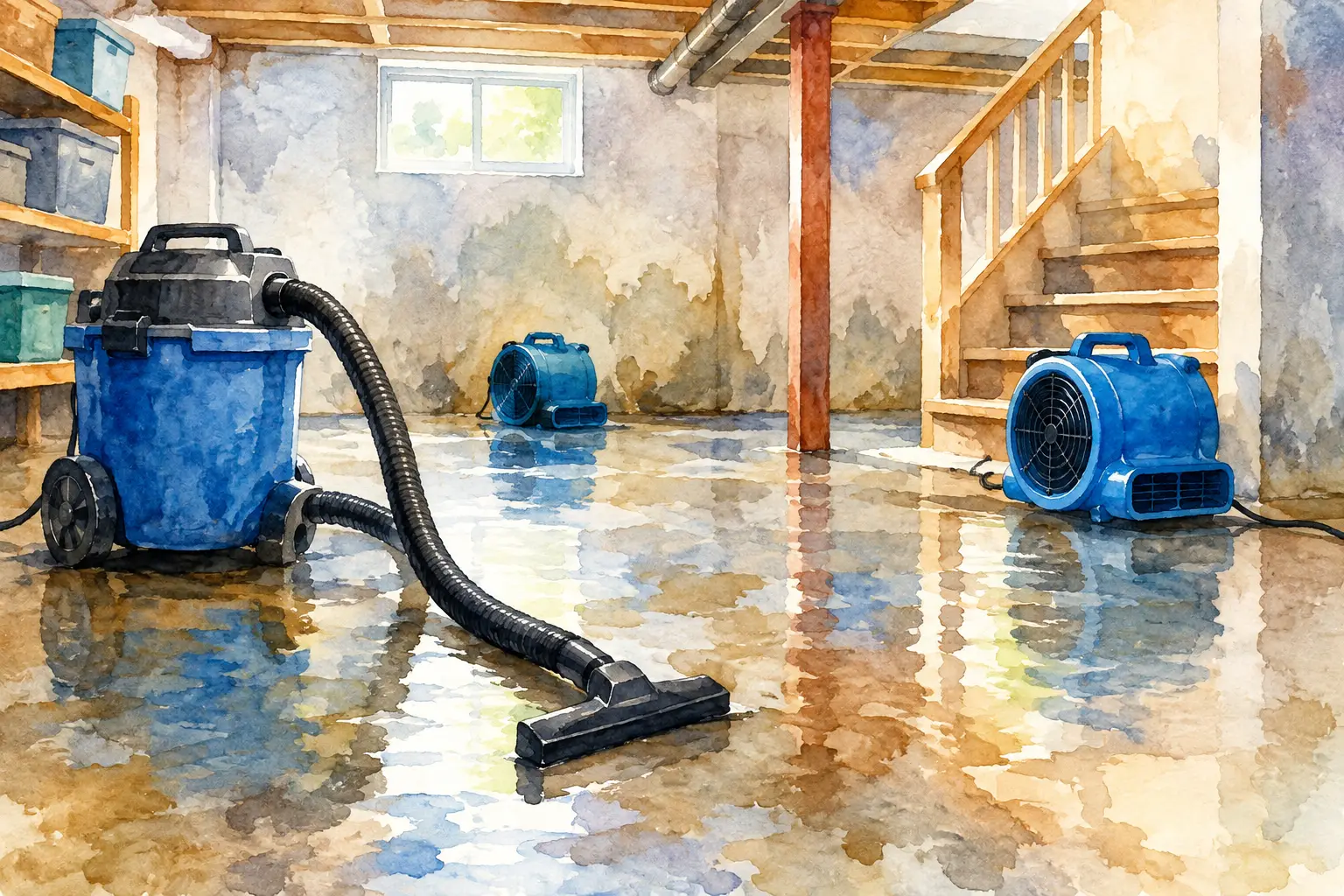
Avoid relying on fans alone. Improper airflow can push moisture or contamination into unaffected spaces, and it does not address water trapped beneath flooring, inside wall systems, or in pallet materials. A professional assessment determines where controlled drying equipment, dehumidification, containment, and monitoring are needed.
Warehouse Water Damage Guide: Assess the Water and the Materials
Not all water losses carry the same health or cleanup requirements. Clean water from a supply line can become contaminated if it sits for too long or contacts dirty building materials. Water from a drain backup, sewer line, exterior flood, or unknown source requires more caution because it may contain bacteria, chemicals, or other contaminants.
The affected materials matter just as much. Nonporous metal shelving may be cleaned and dried effectively. Wet drywall, insulation, carpet, particleboard, cardboard, and certain ceiling materials may require removal depending on the water source and the length of exposure. Inventory decisions should be made deliberately, not by appearance alone.
For each affected zone, document the product type, lot numbers when applicable, location, pallet level, visible damage, and disposition decision. Segregate questionable stock from confirmed unaffected goods. This supports internal quality control, insurance documentation, and any required regulatory or customer notification process.
A restoration team should use moisture detection tools to map the full impact. This often reveals water beneath shelving, inside lower wall sections, under floor coverings, and around dock doors or building penetrations. The visible wet area is rarely the complete affected area.
Restore Operations in Three Clear Phases
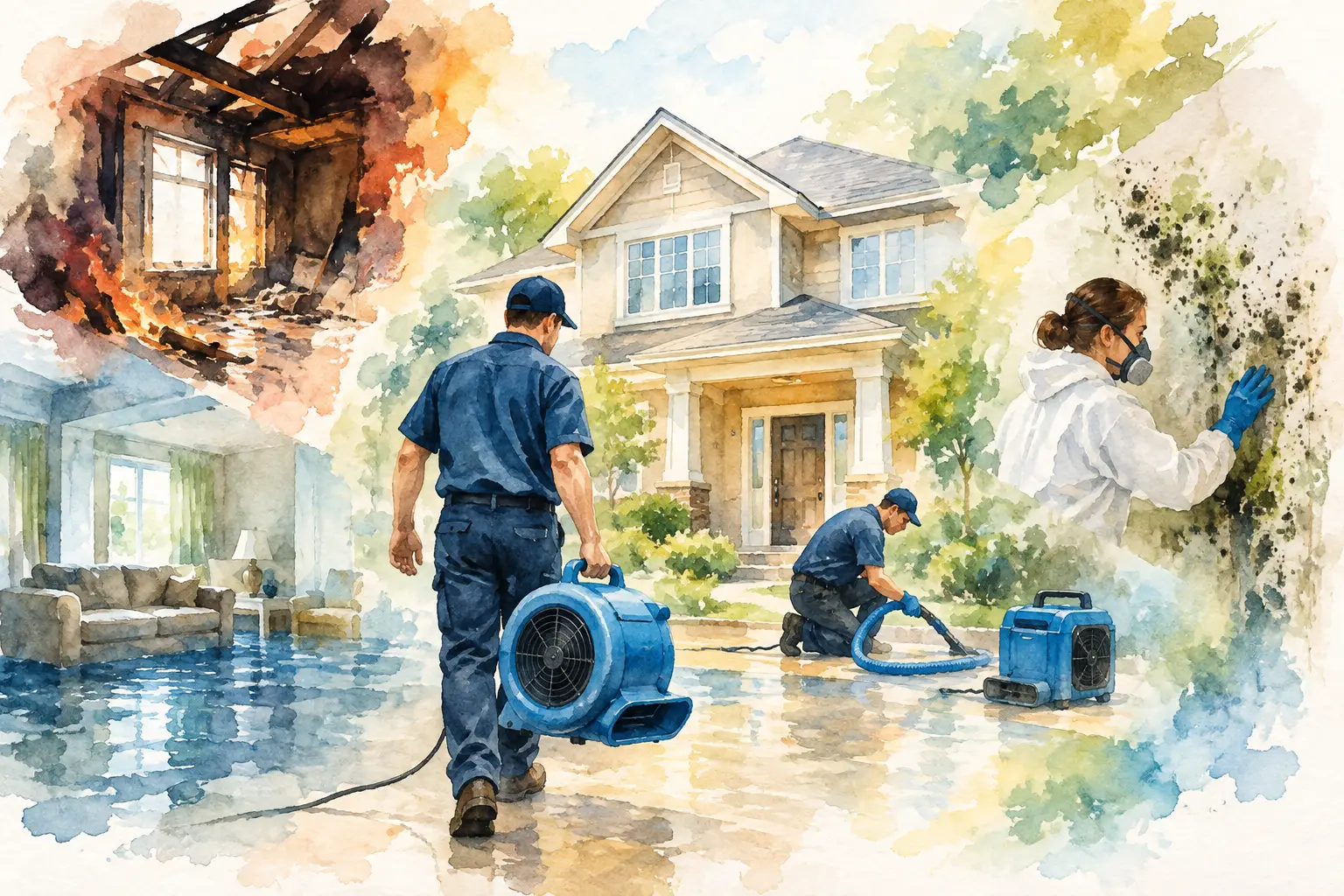
An organized recovery process gives warehouse leadership better control over decisions, costs, and communication. ServiceMaster Restore by DCS approaches commercial losses through assessment, mitigation, and restoration, helping reduce the need to coordinate separate emergency, cleaning, and reconstruction vendors.
Assessment
Assessment establishes what happened, how far water traveled, what materials are affected, and what safety concerns exist. It includes moisture mapping, evaluation of the water source, inspection of building materials, and identification of operational priorities. A strong assessment also creates the documentation needed to communicate clearly with insurers, ownership groups, tenants, and leadership teams.
For a warehouse, priorities may include reopening a shipping corridor, protecting temperature-sensitive product, isolating damaged inventory, or restoring power to a critical room. The best recovery plan addresses those needs while ensuring the building is actually dry and safe, not merely open for temporary use.
Mitigation
Mitigation is the work that prevents additional damage. It may include emergency water extraction, removal of saturated materials, controlled demolition, containment, cleaning, odor control, dehumidification, and structural drying. In contaminated-water situations, it also includes appropriate cleaning and disinfection procedures.
Drying should be monitored, not guessed. Moisture readings taken over multiple days show whether materials are reaching acceptable drying goals. This protects against mold growth, corrosion, warped materials, and hidden moisture that can create problems long after the warehouse appears recovered.
Restoration
Restoration returns the building to its pre-loss condition. Depending on the scope, this may include replacing drywall or insulation, repairing flooring, repainting, rebuilding office areas, restoring dock-adjacent finishes, and completing specialty cleaning before the space returns to full use.
The practical goal is to restore function as quickly as conditions allow. In some cases, a phased reopening makes sense. One portion of the facility may resume operations while repairs continue behind containment in another area. In other cases, especially after sewage intrusion or major flooding, full clearance and more extensive restoration may be necessary before operations restart.
Protect Inventory, Equipment, and Records
Warehouse managers often focus first on the building, but the contents can represent the greater financial exposure. Do not stack wet cartons on dry floors or mix them with unaffected stock. Wet cardboard loses structural strength quickly and may collapse during handling. Use designated staging areas and clearly mark inventory that requires inspection or disposition.
Forklifts, pallet jacks, conveyors, chargers, scanners, and electrical equipment should be evaluated before being returned to service. Water exposure can create delayed corrosion or electrical failures. If equipment was in standing water, do not assume it is safe because it powers on.
Paper records, archived files, and labels may be recoverable if addressed quickly. The appropriate method depends on the material and contamination level. Keep records separated, avoid handling fragile wet documents excessively, and document their condition before disposal decisions are made.
Build a Better Plan Before the Next Loss
A warehouse water emergency is easier to control when the response plan already exists. Keep emergency shutoff locations current, identify after-hours contacts, map critical equipment and high-value storage zones, and establish a process for relocating inventory. Review roof maintenance, dock drainage, sprinkler systems, plumbing, and exterior water management on a regular schedule.
Pre-loss planning should also define who can authorize emergency work, communicate with the insurer, approve inventory disposition, and issue employee safety instructions. For multi-shift facilities, those responsibilities need to be clear at every hour, not only during business hours.
When water disrupts a warehouse, calm decisions and fast coordination protect more than the building. They protect customer commitments, employee safety, inventory value, and the momentum of the business. A prepared response team can help restore order while your operation focuses on what must keep moving.