A sewage backup can turn a basement, bathroom, or business space into a health and property emergency within minutes. Knowing how to handle sewage backup starts with one priority: keep people away from contaminated water and take quick steps to prevent the damage from spreading.
Sewage water may contain bacteria, viruses, parasites, chemicals, and other contaminants. It can soak into drywall, carpet, insulation, furniture, stored belongings, and structural materials. What looks like a small overflow at first can become a larger restoration project if it is not contained, cleaned, dried, and repaired correctly.
What to Do Immediately After a Sewage Backup
Do not enter standing sewage water unless there is an immediate life-safety reason to do so. Keep children, pets, customers, employees, and anyone with a compromised immune system out of the affected area. Close doors to limit foot traffic, but do not seal off the space so tightly that odors and moisture are pushed into other areas.
If it is safe to reach the electrical panel without walking through water, turn off electricity to the affected area. Never touch outlets, appliances, or electrical cords near standing water. If the backup is close to a furnace, water heater, or other appliance, avoid handling it yourself. A professional can determine whether equipment can be cleaned and restored or needs replacement.
Stop using plumbing fixtures throughout the property. Flushing toilets, running sinks, using showers, or operating a dishwasher or washing machine can add more water to an already blocked line. In a commercial facility, notify occupants and staff immediately so they do not use restrooms or drains connected to the problem area.
If the source is a localized toilet overflow and the water has not spread, shutting off the toilet’s supply valve may help stop additional flow. For backups from a floor drain, multiple fixtures, or a main sewer line, do not attempt to force the blockage with chemical drain cleaners. These products can create additional hazards for occupants and the technicians who must later clear the line.
Why Sewage Cleanup Requires More Than Mopping
Sewage is generally treated as highly contaminated water. Cleanup is not simply a matter of removing visible water, applying a household cleaner, and running a fan. Porous materials can retain contamination even after their surfaces look dry.
Carpet padding, unfinished wood, insulation, ceiling tiles, paper products, mattresses, and many upholstered items often cannot be safely restored after direct contact with sewage. Drywall may need to be removed above the affected level because contaminated moisture can wick upward inside the wall cavity. A restoration team evaluates each material based on the type and extent of contamination, how long it was exposed, and whether it can be cleaned to a safe standard.
There is also a trade-off between saving belongings and protecting health. Sentimental or high-value items may be candidates for specialized cleaning, but items with absorbent materials may not be worth the risk or cost of restoration. Clear documentation helps property owners make informed decisions and supports an insurance claim.
How to Handle Sewage Backup Without Spreading Contamination
Once everyone is safe, limit the movement of contaminated water. Do not walk from the affected space through clean areas in the same shoes. If you must enter briefly to retrieve essential items, wear waterproof boots, gloves, eye protection, and protective clothing that can be disinfected or discarded. Avoid creating splashes.
Move uncontaminated belongings out of harm’s way only if they can be reached without contact with sewage. Place items on clean shelving, counters, or plastic sheeting outside the affected area. Do not carry wet, contaminated contents through the home or building without containment.
Take photos or video from a safe location before cleanup begins. Document the affected rooms, water levels, damaged materials, and belongings. Keep notes about when the backup was discovered, which fixtures were involved, and any visible cause, such as a blocked drain or sewer cleanout overflow. This information can be valuable for plumbing diagnosis, insurance reporting, and restoration planning.
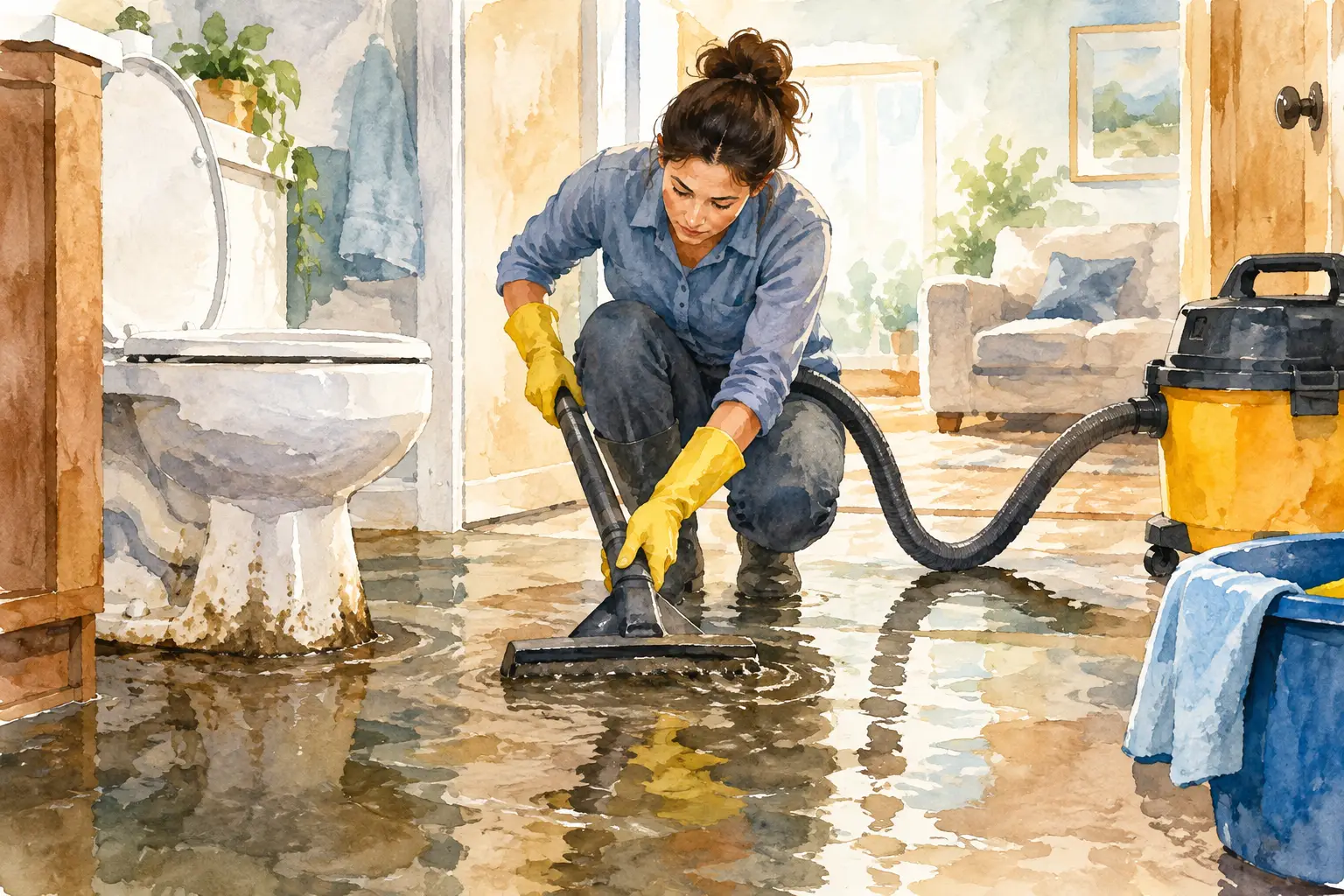
Avoid using a regular household vacuum, shop vacuum, or rental carpet cleaner on sewage water. These tools are not designed to safely collect contaminated wastewater and may spread contamination through the property. Fans should also be used carefully. Improper airflow can move odors, moisture, and contaminants into unaffected rooms before cleaning and containment are complete.
Assessment, Mitigation, and Restoration
A structured recovery process brings order to a disruptive situation. The first step is assessment. A qualified restoration team identifies the water source, maps the affected areas, measures moisture, evaluates damaged materials, and develops a scope for safe cleanup. If the backup is active, a plumber may be needed to correct the line issue before restoration can move forward.
Mitigation follows. This includes extracting contaminated water, establishing containment, removing unsalvageable materials, cleaning and disinfecting affected surfaces, and controlling odors. Air filtration and professional drying equipment may be used to improve indoor conditions and address moisture in structural materials.
Restoration is the work of returning the property to pre-loss condition. Depending on the damage, that may include replacing drywall, insulation, flooring, cabinetry, baseboards, and other finishes. For a business, the plan may also include phased work to protect unaffected operations and reduce downtime where conditions allow.
ServiceMaster Restore by DCS provides 24/7/365 emergency response for sewage cleanup, water damage mitigation, and reconstruction across Illinois and southeastern Wisconsin. One accountable restoration partner can help simplify the process from the initial assessment through cleanup, documentation, and rebuilding.
When to Call for Professional Sewage Cleanup
Professional help is the right choice whenever sewage has entered a living, working, storage, or public-facing space. This is especially urgent when the backup involves a basement floor drain, a main sewer line, multiple fixtures, a flooded restroom, or water that has reached carpet, walls, HVAC components, or electrical systems.
Commercial properties need prompt action because sewage exposure can affect employee safety, customer access, inventory, food-service operations, and regulatory responsibilities. A restaurant, church, warehouse, apartment building, or office may need controlled access, detailed documentation, and a recovery plan that accounts for the facility’s specific operations.
Even after water is removed, do not assume the space is safe because it no longer looks wet. Moisture behind walls or beneath flooring can lead to lingering odors, material deterioration, and mold growth. Professional moisture detection, cleaning procedures, and drying verification help reduce those risks.
Preventing Another Backup
After the immediate emergency is under control, identify why it happened. Common causes include tree root intrusion, grease buildup, damaged sewer pipes, aging plumbing, heavy rainfall, municipal sewer issues, and items flushed or washed down drains that do not belong there.
A licensed plumber can inspect and repair the sewer line, while a restoration provider addresses the damage inside the property. For homes with recurring backups, ask about camera inspections, sewer maintenance, backwater valves, and changes to drainage or sump pump systems. Commercial facilities may benefit from scheduled drain maintenance and an emergency response plan that tells staff exactly who to call and how to protect occupants.
A sewage backup is unpleasant, but the next step does not have to be uncertain. Protect people first, stop additional water where it is safe to do so, and bring in experienced help early so your property can be cleaned, restored, and returned to use with confidence.