A fire can leave a property exposed even after the flames are out. Broken windows, burned doors, damaged roofing, and openings in exterior walls allow rain, wind, animals, trespassers, and additional loss to enter the building. An emergency board up after fire is the first practical step in protecting what remains while the full restoration plan takes shape.
For homeowners, that protection can preserve personal belongings and prevent a difficult loss from becoming worse. For business owners and property managers, it can help secure inventory, equipment, records, and the building itself while supporting a faster, more organized return to operations.
Why emergency board up after fire matters
Fire damage is rarely limited to the area where the fire began. Heat can crack glass, weaken doors, compromise siding, and damage sections of the roof. Firefighting efforts may leave windows open, create access points through walls or roofing, and introduce substantial water damage. Once the property is no longer sealed, outside conditions can quickly add to the problem.
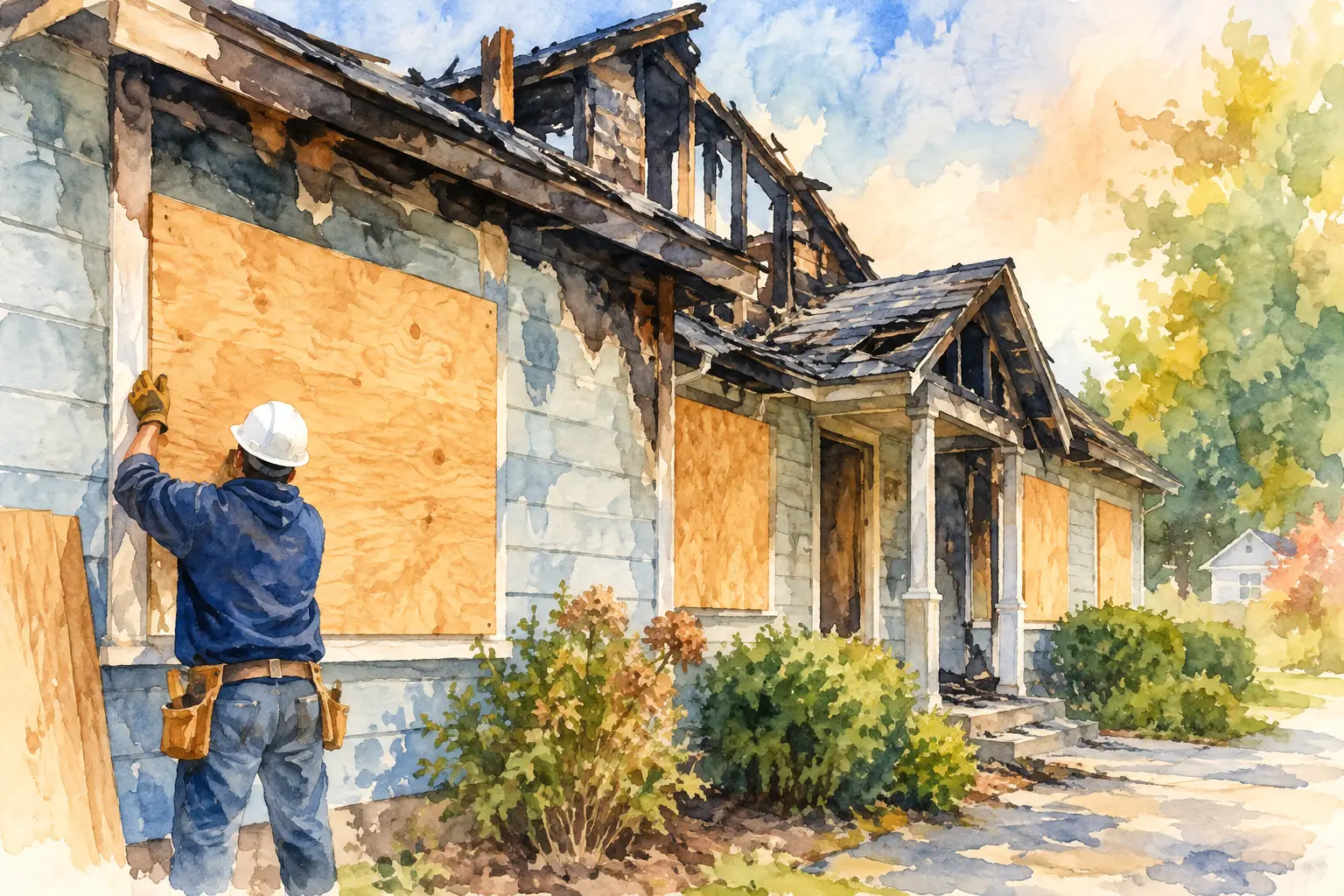
A professional board-up service creates a temporary barrier around vulnerable openings. Depending on the damage, this may include boarding windows and doors, securing damaged wall openings, covering compromised roof sections, or using reinforced materials to restrict access. The goal is not simply to make the building look closed. It is to stabilize the property, reduce preventable damage, and create a safer environment for the next stages of recovery.
Time matters in Chicagoland, throughout Illinois, and southeastern Wisconsin. Rain, snow, wind, freezing temperatures, and humidity can worsen already damaged materials. A roof opening that seems manageable on a clear afternoon can allow significant water intrusion during an overnight storm. Prompt protection helps prevent moisture from reaching insulation, flooring, drywall, electrical systems, and unaffected rooms.
What a professional board-up service includes
Every fire loss is different. A small kitchen fire may require boarding a single window and securing a damaged exterior door. A larger commercial loss may involve multiple access points, roof tarping, perimeter protection, and a detailed plan for keeping the site secure while fire, smoke, and water mitigation begins.
The process should start with an assessment of immediate risks. Restoration professionals identify openings, unstable materials, water intrusion concerns, and areas that may be unsafe to enter. They also consider how to secure the property without causing unnecessary additional damage to portions of the building that can be restored.
Board-up work is then completed using materials and methods appropriate to the structure. A proper installation should be secure enough to deter unauthorized entry and withstand normal weather conditions, while still allowing safe access for inspectors, adjusters, restoration crews, and authorized property representatives.
For commercial properties, security planning can require more coordination. A warehouse may need several large openings covered while preserving controlled access for essential personnel. A restaurant might need to protect food-service equipment and inventory from weather and vandalism. An apartment building or church may require careful separation of damaged and unaffected areas so the building owner can manage safety and continuity concerns.
The risks of waiting to secure the property
It can be tempting to wait for an insurance adjuster, a contractor, or daylight before taking action. In many cases, however, delaying basic protective measures creates risks that are more expensive and disruptive than the initial fire damage.
Weather is one concern, but it is not the only one. Open properties can attract trespassers, theft, and vandalism. Wildlife can enter through gaps in exterior walls or damaged rooflines. Wind can carry soot and ash farther into unaffected areas. Water from rain, snow, or firefighting efforts can continue to migrate into building materials, creating conditions that may lead to odor issues or mold growth.
There is also a liability concern. If a damaged building is unsecured, a visitor or unauthorized person could enter an unsafe area and be injured. Property owners should not attempt to handle hazardous board-up work themselves, especially where there may be structural damage, exposed wiring, broken glass, contaminated water, or unstable debris.
What to do after the fire department leaves
Once fire officials have cleared the scene, the next decisions can feel overwhelming. Focus first on safety and protection. Do not reenter the building until authorities say it is safe, and do not touch electrical equipment or structural materials that appear damaged.
Take these immediate steps when possible:
- Contact your insurance carrier to report the loss and begin the claim process.
- Document visible damage from a safe location with photos or video.
- Arrange professional emergency board-up and roof protection as soon as possible.
- Keep receipts and records for emergency services, temporary relocation, and related expenses.
- Avoid throwing away damaged items until they have been documented and your insurer provides direction.
If the property is a business, notify key stakeholders and establish one point of contact for the recovery process. Clear communication helps reduce confusion when adjusters, restoration crews, employees, tenants, and vendors need updates. A restoration provider can also help document conditions, identify immediate mitigation needs, and organize work around critical business assets.
Board-up is the beginning, not the full recovery
Securing the structure is urgent, but it is only the first phase. After an emergency board up after fire, the property needs a clear path from damage assessment to mitigation and restoration.
Assessment identifies the full extent of fire, smoke, soot, water, and structural damage. Smoke can travel through HVAC systems, wall cavities, and areas far from the fire itself. What appears to be a contained incident may still leave odors, corrosive residues, and contamination in other rooms or sections of the building.
Mitigation focuses on stopping additional damage and stabilizing the environment. This may include water extraction, drying, soot removal, odor control, contents protection, and temporary power or climate-control planning. The right approach depends on the materials affected, how long the property was exposed, and whether parts of the building can safely remain occupied.
Restoration follows with cleaning, repairs, and reconstruction needed to return the property to its pre-loss condition. In some cases, the same team can manage the work from the emergency response through rebuilding. That continuity reduces the burden of coordinating separate vendors during an already stressful time.
What to look for in a fire damage recovery partner
The right provider should be available when the emergency happens, not only during regular business hours. Look for a team that can respond 24/7/365, secure the site quickly, explain the next steps in plain language, and coordinate fire, smoke, water, odor, cleaning, and reconstruction needs.
Experience with insurance-related documentation also matters. Restoration teams do not replace your insurer or make coverage decisions, but thorough photos, moisture readings, damage records, and scope documentation can support a more organized claims process. For commercial clients, a provider should understand continuity priorities, safety protocols, and the need to minimize downtime wherever possible.
ServiceMaster Restore by DCS helps residential and commercial property owners take control after a loss with emergency response, damage mitigation, cleaning, and reconstruction managed through one accountable recovery process. The work begins with protecting the property, then moves forward with a plan built around what matters most to the people who depend on that space.
A fire changes the condition of a property in minutes, but the next hours can protect its future. Securing damaged openings quickly gives your home or business a safer starting point for the work ahead and gives you room to move from emergency decisions toward recovery.